
Key facts: Tree roots in the sewer line
Roots in the sewer: the short answer
Tree roots in a sewer line: the short answer
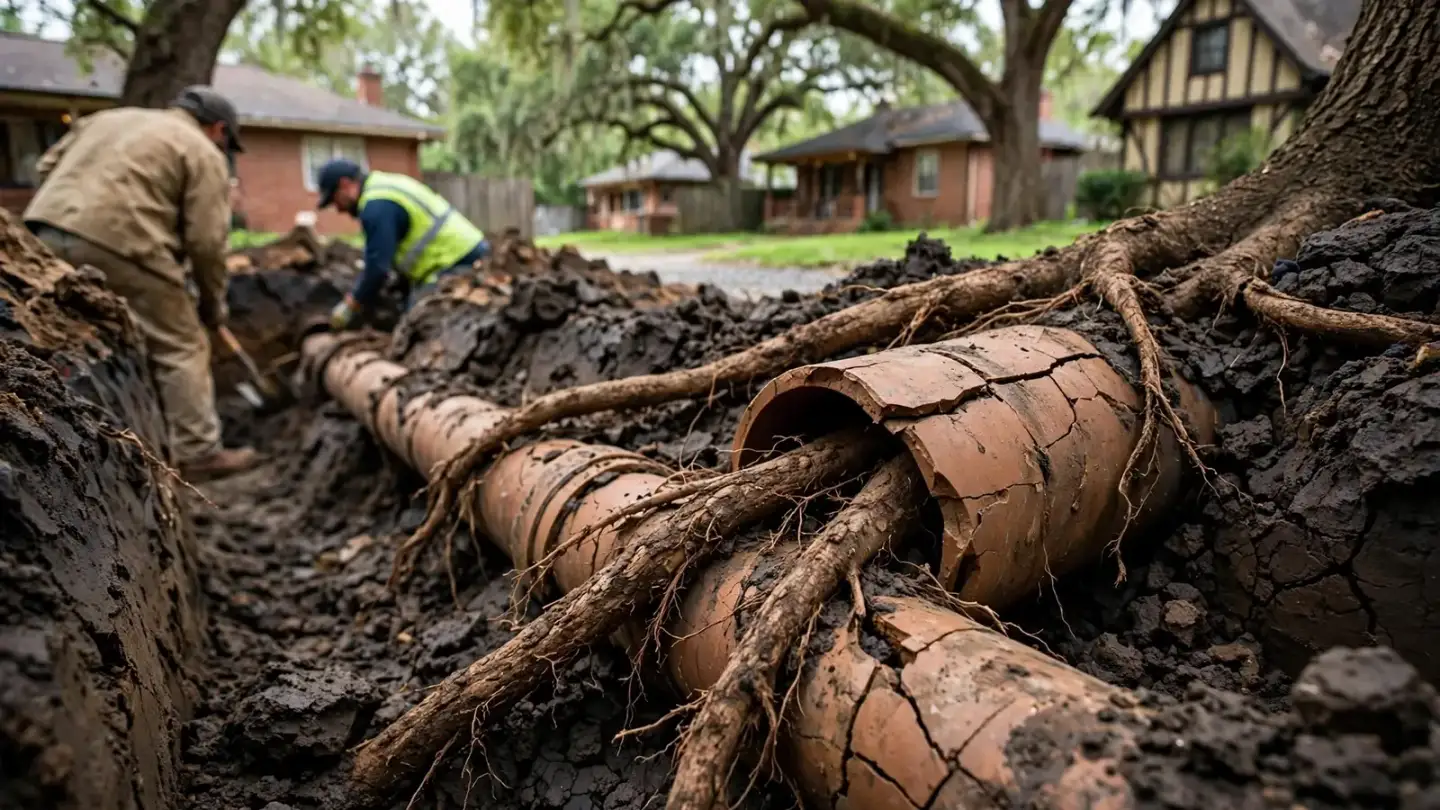
Roots enter through cracks and loose joints and fill the pipe over months. Cutting or jetting them restores flow, but they grow back from the same openings. Lining or replacing the pipe seals those openings for good.
Root symptoms
Root problem signs and responses
| Sign | Likely cause | What to do |
|---|---|---|
| Drains slowing over months | Roots narrowing the pipe | Clean and inspect |
| Backups in late summer | Roots seeking water in drought | Clean; plan permanent fix |
| Clogs return after cleaning | Roots regrowing | Line or replace |
| Big tree near the line | Likely root source | Camera inspection |
Tree figure
Checks you can make
Root checks you can make yourself
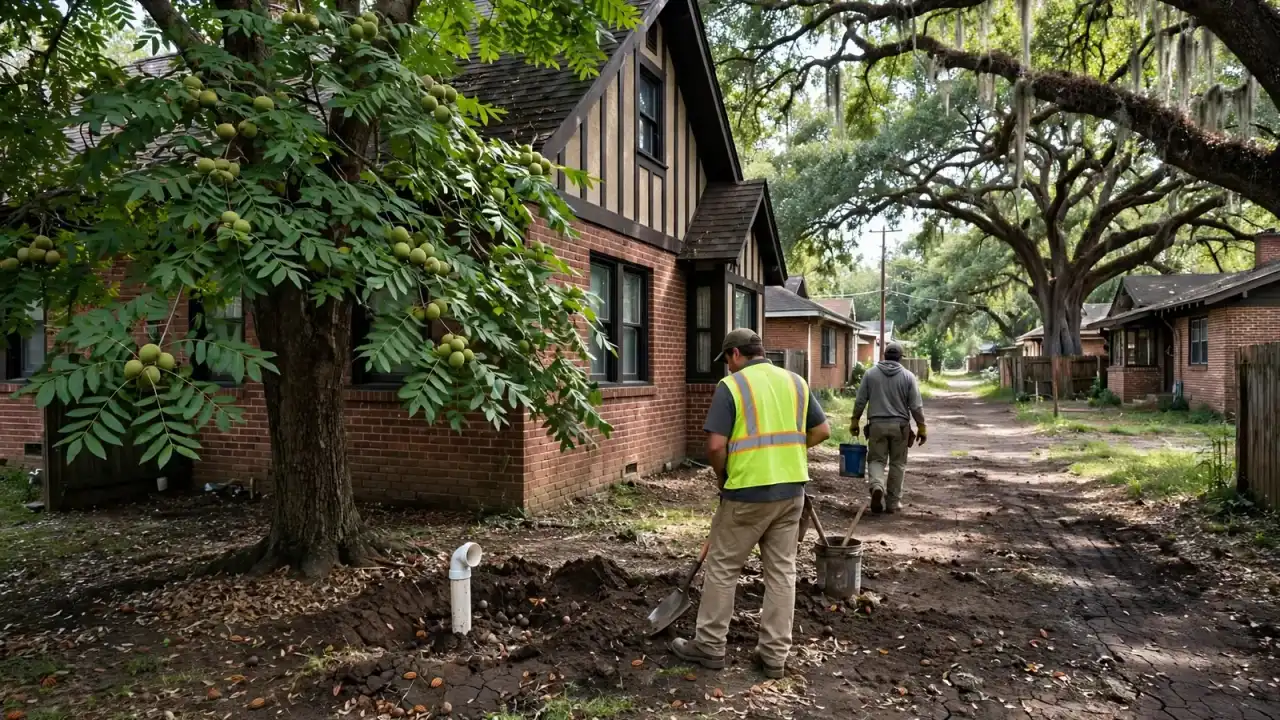
- Note large trees within reach of the sewer path.
- Track how often drains slow or clogs return.
- Find your cleanout and keep it accessible.
- Keep wipes and grease out of drains.
How roots get in
How roots find their way into pipes
Roots follow moisture. A small leak at a joint creates a moist zone that fine roots grow toward. They enter the gap, find water and nutrients, and grow quickly into a mat that catches waste.
Dallas trees and clay
Why Dallas lines are especially vulnerable
Mature live oaks, pecans and elms shade many older neighborhoods. The clay shrinks in drought and opens joints. Together, they make roots a frequent problem in Lakewood, the M Streets, Kessler Park and similar areas.
Cleaning is temporary
Why root cleaning is only temporary
Cutting removes roots from inside the pipe but leaves the openings. Roots regrow, often within months. Cleaning buys time while you plan a permanent fix.
How a plumber fixes root problems
How plumbers deal with roots
- 1
Cut or jet
Clear the roots from the pipe.
- 2
Inspect
Camera shows entry points and pipe condition.
- 3
Choose a fix
Lining, spot repair or replacement.
- 4
Verify
Film the finished line.
Fix or keep cleaning
Choosing between cleaning and a permanent fix
If cleaning is needed once a year or more, or backups are damaging the house, a permanent fix is usually worth it. Lining suits round pipe with root entry at joints; replacement suits broken or sagging pipe.
Root problems by neighborhood
Where root problems are most common in Dallas
Roots are most common in neighborhoods with older clay or cast iron laterals and mature canopy. Lakewood, the M Streets, Kessler Park, Winnetka Heights, Preston Hollow and much of East Dallas fit that description. On many of these lots, laterals pass close to trees planted decades ago. Newer subdivisions with PVC laterals see fewer root problems, though roots still find damaged sections and poorly sealed connections.
Root seasons
When roots grow fastest
Roots grow most actively in spring and push hardest for water during hot, dry summers. In Dallas, many root-related backups happen from July through September. If your line needs regular cleaning, scheduling it in late spring can prevent a summer backup.
Roots and older clay pipe
Why clay pipe invites roots
Older clay laterals were made in short sections joined with mortar or early gaskets. As those joints aged and the ground moved, small gaps opened at nearly every joint. A camera inspection of a root-filled clay line often shows root masses at regular intervals, each marking a joint. Lining is often the most effective fix for this pattern because it seals every joint at once.
Living with your trees
Keeping both your trees and a working sewer
Trees add shade and value, and most homeowners want to keep them. A sealed pipe and a healthy tree can coexist. Lining or replacing the line removes the openings roots use. For new plantings, choose locations well away from the sewer path and consider the mature size of the tree.
Signs of roots in a newer line
Roots in newer Dallas sewer lines
Even PVC lines can have root problems if a joint was poorly glued, a section cracked during foundation movement or a connection to old pipe was left unsealed. Root intrusion in newer lines is usually localized and suited to spot repair once the camera finds the entry point.
Delaying root repairs
Why waiting on roots makes things worse
Roots that stay in a pipe keep growing, and they widen the joints they entered. Over time, a line that could have been lined may crack or shift until replacement is needed. Waiting also raises the chance of a backup inside the house, with cleanup on top of the repair. Acting after the first or second cleaning, rather than the fifth, usually keeps options open.
Roots and the camera
What roots look like on a camera video
On video, fine roots look like hair or cobwebs at joints. Heavier intrusions look like a tangled mass filling the pipe. A single thick root pushing through a crack looks like a branch. The plumber notes where each appears and how far along the line, which guides the repair.
Root control products
Using root control treatments safely
Some homeowners use root control products poured into toilets or cleanouts. They can slow regrowth but do not seal openings. Follow label directions closely, and never mix products. A plumber can advise whether a treatment makes sense between cleanings.
Preventing root problems
Preventing roots in the future
- Plant new trees away from the sewer path.
- Seal the pipe with lining or replacement.
- Fix irrigation leaks near the line.
What to tell the plumber about roots
What to tell the plumber about roots
- Where large trees are.
- How often drains slow.
- Any past cleaning and videos.
Roots guide questions
Questions about roots in sewer lines
Do I have to remove the tree?
Usually not. Sealing the pipe keeps roots out while keeping the tree.
Why do roots come back after cleaning?
The openings they used are still there. Only sealing the pipe stops regrowth.
Can roots break a pipe?
They mostly enter existing cracks and joints, then widen them as they grow.
When are roots worst in Dallas?
Often in late summer, when trees search for water during heat and drought.
Can roots cause a sewer line to collapse?
Over years, roots widen cracks and displace sections, which can contribute to collapse in weak pipe such as Orangeburg or old clay.
How long does root cleaning last?
It varies by tree, season and pipe condition, from a few months to a year or more. Regrowth is expected unless the pipe is sealed.
Is jetting or cabling better for roots?
Cabling cuts a path quickly; jetting cleans the full pipe wall more thoroughly but must be used carefully on fragile pipe. A camera helps decide.
Can roots enter from a neighbor's tree?
Yes. Roots cross property lines easily, but responsibility for your building sewer stays with you.
Will a new PVC line stop roots?
Properly joined PVC or fused HDPE gives roots few ways in.