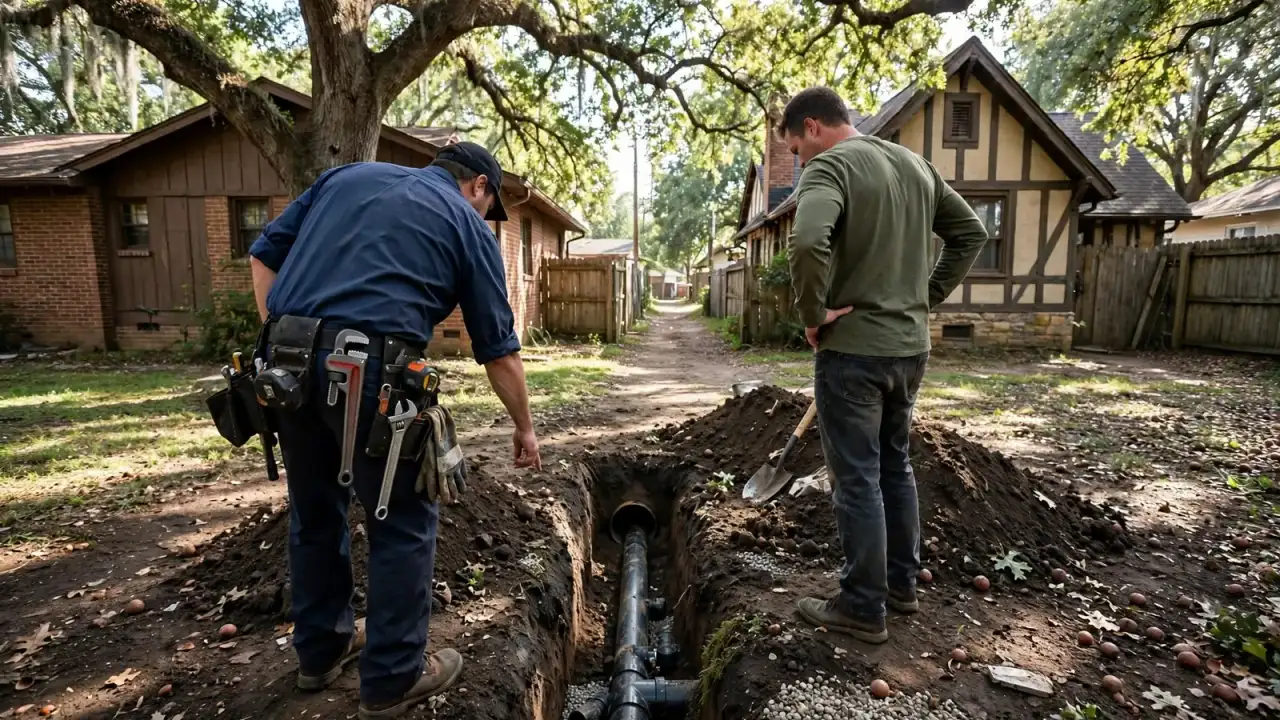
Key facts: M Streets
- The M Streets neighborhood, also known as Greenland Hills, is known for its 1920s-1930s Tudor-style cottages [1].
- Clay sewer pipe from that era has many joints that can open and admit roots as the ground moves [2].
- Dallas code places the building sewer from the house to the city lateral under the owner's responsibility [3].
- Texas requires a call to 811 before excavation so utilities can be marked [4].
M Streets coverage
M Streets ZIP code covered
The plumbing network accepts calls from the M Streets ZIP code. Coverage can change, so call to confirm.
- 75206: the M Streets (Greenland Hills), Lower Greenville and nearby streets east of Central Expressway.
M Streets housing
What M Streets homes are like
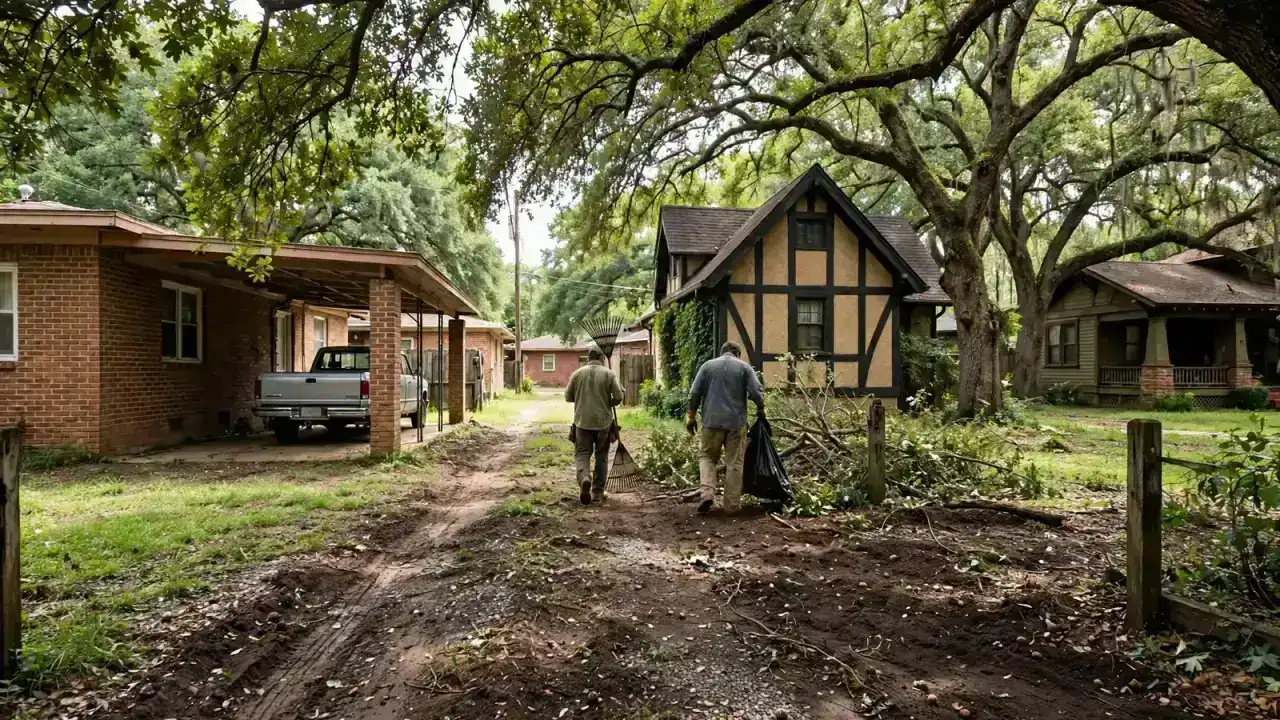
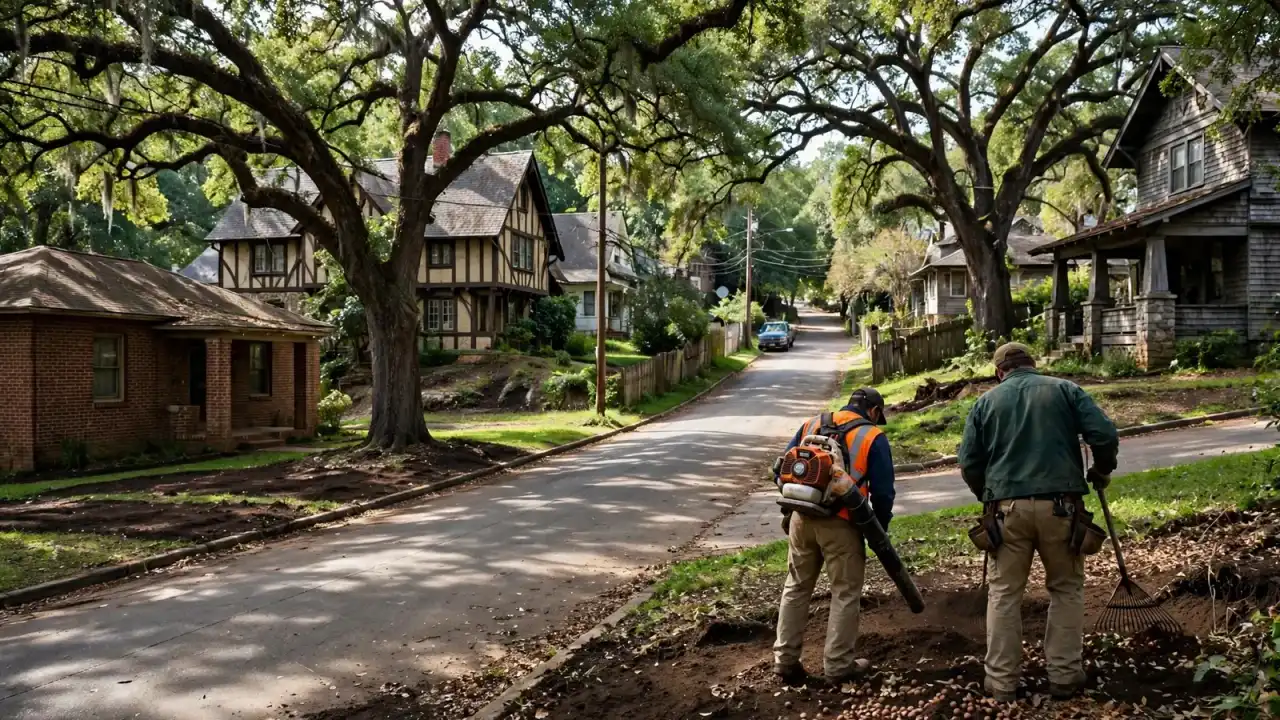
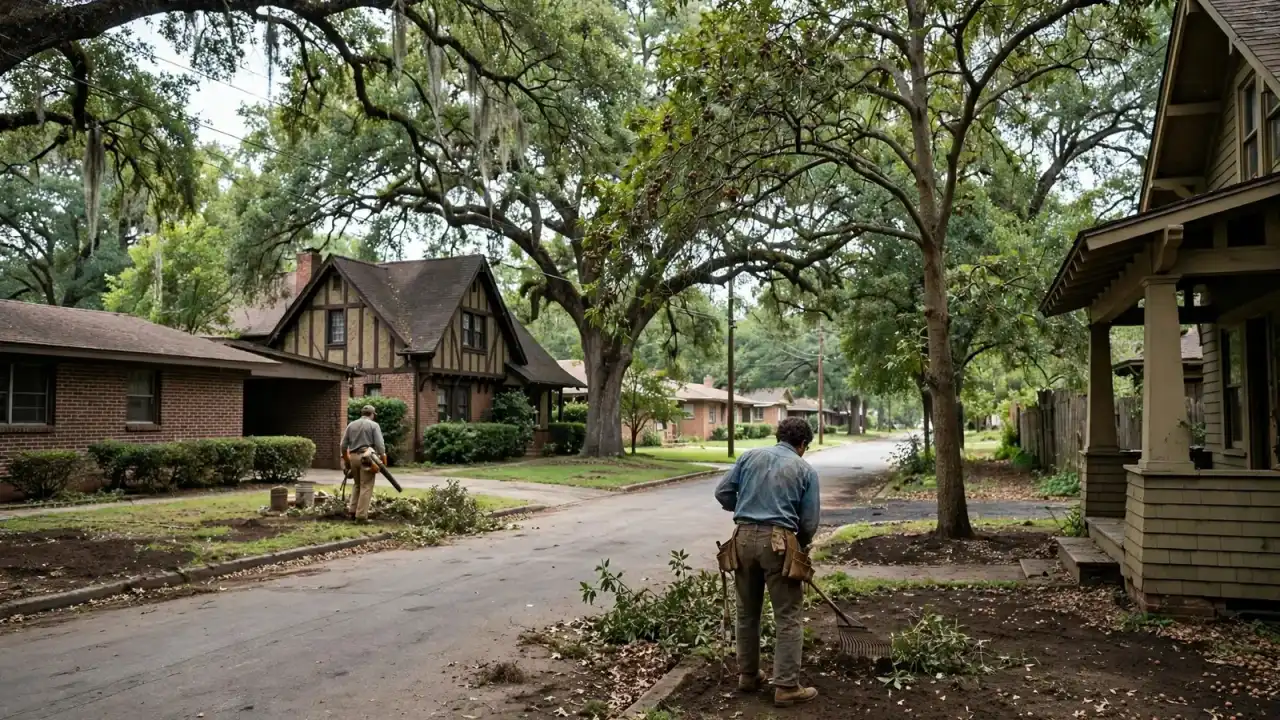
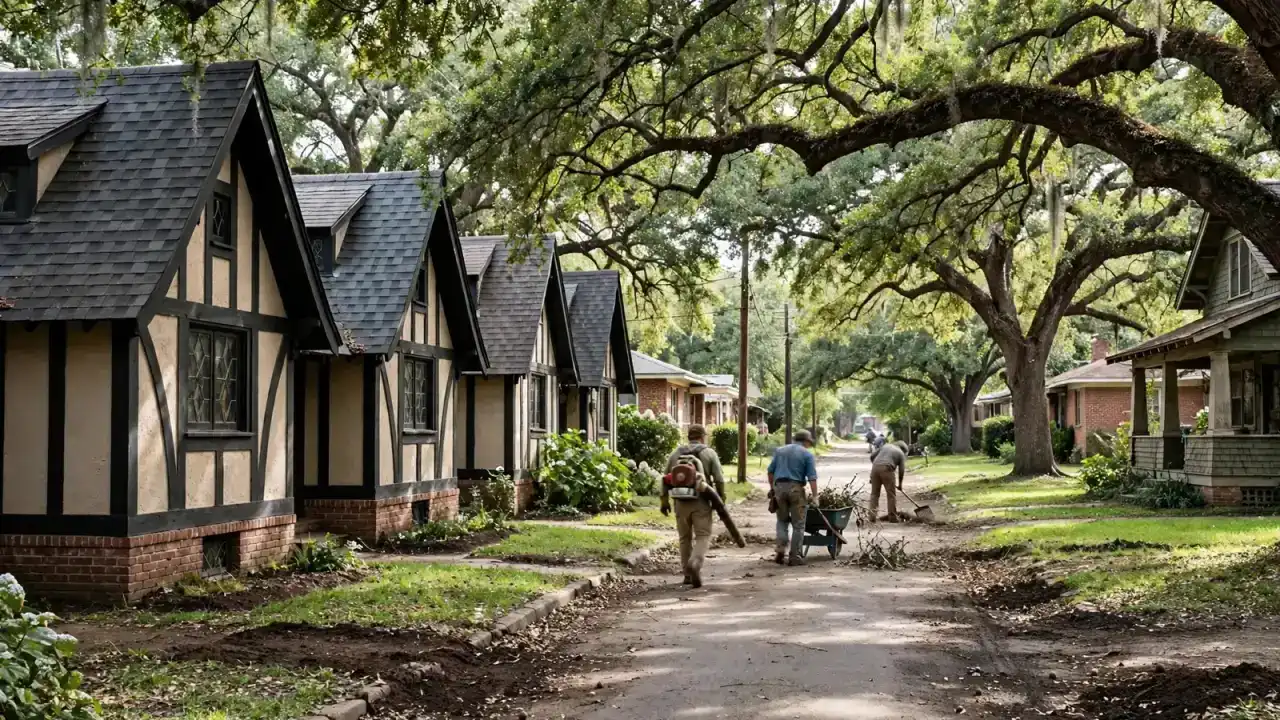
Greenland Hills was developed in the 1920s and 1930s with compact Tudor Revival cottages: steep front gables, arched doorways, brick or stucco facades and small lots. Streets run in a tight grid, and most blocks have alleys behind the houses with detached garages, fences and utility poles. Many houses sit on pier-and-beam foundations.
The original sewer laterals were clay, running from the back of the house to sewer mains in the alleys. After nearly a century, many have been partly replaced, but plenty of original clay remains. Interior drains are often cast iron, sometimes replaced with PVC during remodels.
The neighborhood is popular, and houses are frequently renovated or expanded. Additions, second stories and new bathrooms change how much water flows through laterals that were sized for small cottages.
M Streets sewer problems
What plumbers see in the M Streets
These are the patterns plumbers meet most here.
Roots at alley-side joints
Trees along fences and alleys send roots into clay joints.
Read moreLaterals under garages
Lines that pass beneath detached garages complicate repairs.
Read moreUndersized lines after additions
More bathrooms and bigger kitchens add flow to old laterals.
Read moreCrawlspace leaks
Pier-and-beam drains corrode and leak under the floor.
Read more
Alley sewers in the M Streets
Alley laterals and how they shape repairs
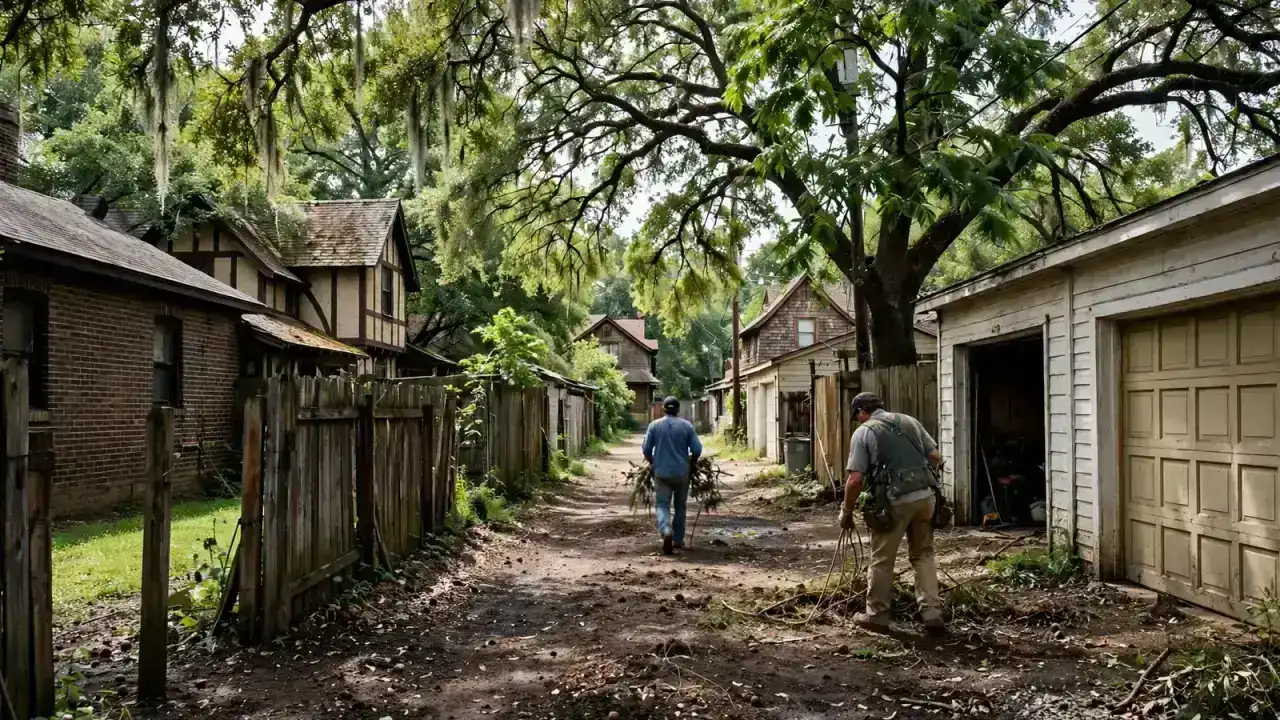
Because most M Streets houses drain to the alley, the lateral runs across the back yard, often under a patio, a fence and sometimes a detached garage. A camera and locator trace that path. Repairs then depend on what sits above: trenchless methods avoid breaking slabs and moving garages; excavation works where the path crosses open ground. Access in the alley is tight, with utility poles and neighbors' gates, so equipment and pit locations are planned carefully.
M Streets alley figure
Roots in the M Streets
Trees, fences and roots in M Streets laterals
M Streets lots are small, but many have mature trees in back yards and along alleys, some planted, some volunteers that grew along fence lines. Their roots reach alley-side laterals easily. Camera inspections often show roots at most clay joints near the back of the lot. Lining is a common permanent fix because it avoids digging through fences and garages.
Additions and flow
When M Streets cottages grow
The original cottages had one or two bathrooms. Many now have three or four, plus modern kitchens and laundry. A clay lateral with roots and sags can struggle with that load, leading to backups during heavy use. When planning an addition, check the lateral first. Replacement or lining may be wise before the new rooms go in.
Pier-and-beam drains
Drains under M Streets floors
Under pier-and-beam floors, cast iron drains run through the crawlspace to the lateral. They corrode and can separate at joints. Leaks show up as odors near vents, damp floors or pests. Plumbers can usually reach and replace these drains from the crawlspace.
Clay soil in the M Streets
Expansive soil under the M Streets
The M Streets sit on the same expansive clay as much of Dallas. Seasonal swelling and shrinking move pipe and foundations. Many houses have had foundation work. Checking plumbing before and after leveling helps catch separated joints.
M Streets conservation district
Conservation district rules and sewer work
The M Streets is covered by a city conservation district that guides exterior changes to protect the neighborhood's character. Underground sewer work is generally not the focus of those rules, but any visible restoration, such as rebuilding front walks or steps, should respect them. The plumbing permit itself comes from the City of Dallas.
Planning an M Streets visit
Planning a sewer visit in the M Streets
- 1
Alley access
Note gate locations and whether the garage blocks the path.
- 2
Cleanout
Look for one near the back of the house.
- 3
Additions
Mention recent bathrooms or additions.
- 4
Neighbors
Alley work may affect neighbors' access briefly.
- 5
Crawlspace
Note where the crawlspace entry is.
M Streets layouts
M Streets lot layouts and sewer notes
| Layout | Sewer path | Notes |
|---|---|---|
| Cottage with detached garage | House to alley under yard and near garage | Trenchless often preferred |
| Cottage with rear addition | Under the addition | May need interior or tunneling access |
| Rebuilt home | New interior pipe, old lateral possible | Camera the lateral |
| Duplex | Shared lateral to alley | Higher flow; schedule maintenance |
M Streets repair choices
Choosing repairs in the M Streets
For clay laterals with roots, lining often works well. For sections crushed under garages or patios, pipe bursting or rerouting may be options. For crawlspace drains, replacement is straightforward. The camera video and the layout of the lot decide the approach.
M Streets blocks up close
Sewer notes across the M Streets
- North of VanderbiltClassic Tudor cottages on narrow lots, many with original clay laterals running to the alley.
- South toward Lower GreenvilleMore duplexes and renovated cottages, with heavier use and shared lines.
- Blocks near Central ExpresswayOlder homes and some rebuilds; laterals may connect to mains of differing ages.
- Interior blocks near Glencoe ParkMature trees in back yards and along alleys; roots are the common finding.
Rebuilds and the old lateral
When a new house sits on an old sewer line
Some M Streets cottages have been replaced with larger new homes. New construction gets new interior plumbing, but the lateral to the alley may not have been replaced, especially if it seemed to work. A camera inspection after purchase, or before finishing a rebuild, confirms whether the lateral is original clay. Connecting a modern house with several bathrooms to a century-old clay line invites trouble.
Garages over sewer lines
Detached garages built over M Streets laterals
On many M Streets lots, the detached garage sits at the back near the alley, and the lateral passes beside or beneath it. Garages built or rebuilt after the original lateral may have been placed right over it. Repairs under a garage slab are disruptive if excavated. Lining from a pit in the yard to a pit in the alley can bypass the garage entirely. If replacement is needed, pipe bursting can follow the old path without breaking the slab.
Alley logistics
Working in M Streets alleys
M Streets alleys are narrow, with power poles, trash collection points, fences and neighbors' gates. Plumbers plan equipment size, pit locations and timing around these constraints, and keep the alley passable when possible. Trash collection days matter too. If your connection is in the alley, mention any locked gates or parking restrictions.
Grease and kitchens
Kitchen remodels and grease in M Streets lines
Many M Streets cottages now have large modern kitchens. More cooking means more grease reaching old clay pipe, where it cools and sticks to rough walls and roots. Kitchen-related backups are common in renovated cottages with original laterals. Scraping plates, wiping pans before washing and keeping grease out of the sink help, as does addressing roots and sags in the lateral.
Buying in the M Streets
Sewer checks when buying an M Streets home
Because the houses are old and laterals are often original, a sewer camera inspection is one of the most useful checks a buyer can make in the M Streets. The video shows the material, roots, sags and the condition of the connection in the alley. Sellers with a recent video can share it to avoid surprises.
Seasonal patterns in the M Streets
When M Streets sewers act up
Backups in the M Streets often cluster in late summer, when roots push hardest for water, and after heavy spring storms, when groundwater seeps into cracked clay. Holiday gatherings, with more cooking and more guests, also stress old lines. Planning cleaning or repairs before these peak times helps.
Choosing an M Streets plumber
Questions to ask a plumber in the M Streets
Ask how they will reach an alley-side lateral, whether lining or bursting can avoid the garage, how they will keep the alley open, whether they will film the line and who pulls the Dallas permit. Check their Texas license.
An M Streets camera inspection
What a camera inspection usually shows in the M Streets
On many M Streets lots, the camera enters at a cleanout near the back door or through a toilet. It passes through cast iron under the house, then into clay heading for the alley. Roots tend to cluster near the fence line and the alley, where trees grow along property edges. The camera often meets an offset or crack where the lateral passes the garage. Near the alley, it reaches the connection to the city's lateral. The locator shows how close the line runs to the garage slab and fence posts, which guides the repair plan.
Cleanouts on M Streets cottages
Adding a cleanout to an M Streets cottage
Original M Streets cottages rarely had outdoor cleanouts. Adding one near the back of the house gives plumbers a direct route into the lateral and toward the alley. It also lets the camera look back toward the house drains. Many owners add a cleanout during their first sewer repair.
Tenants and duplexes in the M Streets
Rental cottages and duplexes in the M Streets
The M Streets and nearby Lower Greenville include many rentals. When several tenants share a lateral, backups affect everyone at once, and tenants may not know what not to flush. Landlords can reduce problems with clear guidance to tenants, periodic camera checks and a permanent fix for roots or sags. Keeping a video record also helps with any disputes about what caused a backup.
Pier-and-beam leveling in the M Streets
Re-leveling cottages and the drains
Many M Streets cottages have been re-leveled over the years as the clay moved. Each leveling shifts the drains under the house. Testing drains before and after leveling, and checking crawlspace connections, catches separated joints early.
Typical M Streets repair
A typical repair plan for an M Streets lateral
A common plan for an M Streets cottage is to add a cleanout near the back of the house, cut the roots, film the line and then line the clay from the cleanout to the alley connection. If the camera shows a collapsed section beside the garage, that section is excavated or burst first. The permit, inspection and final video follow. The result is a sealed line that roots cannot enter, with the garage and fences left in place.
Trees along M Streets alleys
Alley trees and their roots
Many M Streets alleys are lined with trees that were never planted on purpose: hackberries, elms and others that grew up along fences. Their roots follow moisture along the alley and into laterals near the connection. Removing volunteer trees from fence lines can reduce future pressure, though sealing the pipe is the real fix.
Utility poles and gas lines
Alley utilities near M Streets laterals
Alleys in the M Streets carry power poles, overhead lines and buried gas services. Before any pit or trench, the 811 call marks buried utilities, and crews plan around poles and guy wires. [4] Pipe bursting near a gas service may require exposing the crossing first. A plumber familiar with the area plans for these details.
M Streets slab additions
Additions on slabs behind pier-and-beam cottages
Many M Streets cottages have rear additions built on slabs behind the original pier-and-beam house. Drains in the addition run under the slab and join the original lines. That transition, where slab meets crawlspace, is a common weak point. If backups or odors start after an addition, the joint between new and old drains is worth checking with a camera.
Laundry in M Streets cottages
Laundry rooms and old laterals
Original cottages had no dedicated laundry rooms. Washers added later in kitchens, back porches or additions discharge large volumes quickly. In a restricted clay lateral, that surge pushes water back up through the lowest drain. If backups happen on laundry day, the lateral is the likely cause.
Fence lines and digging
Fences and sewer work in the M Streets
Fences along back property lines and alleys often sit directly over or beside laterals. Excavation may require removing fence panels temporarily. Trenchless methods usually avoid that. Ask how fences will be handled and restored.
Neighbors and shared walls
Working close to neighbors in the M Streets
Lots are narrow, so equipment, spoil piles and pits may sit close to neighboring yards. Letting neighbors know the schedule helps, especially when alley access is involved.
Restoration in small M Streets yards
Restoring a small M Streets back yard
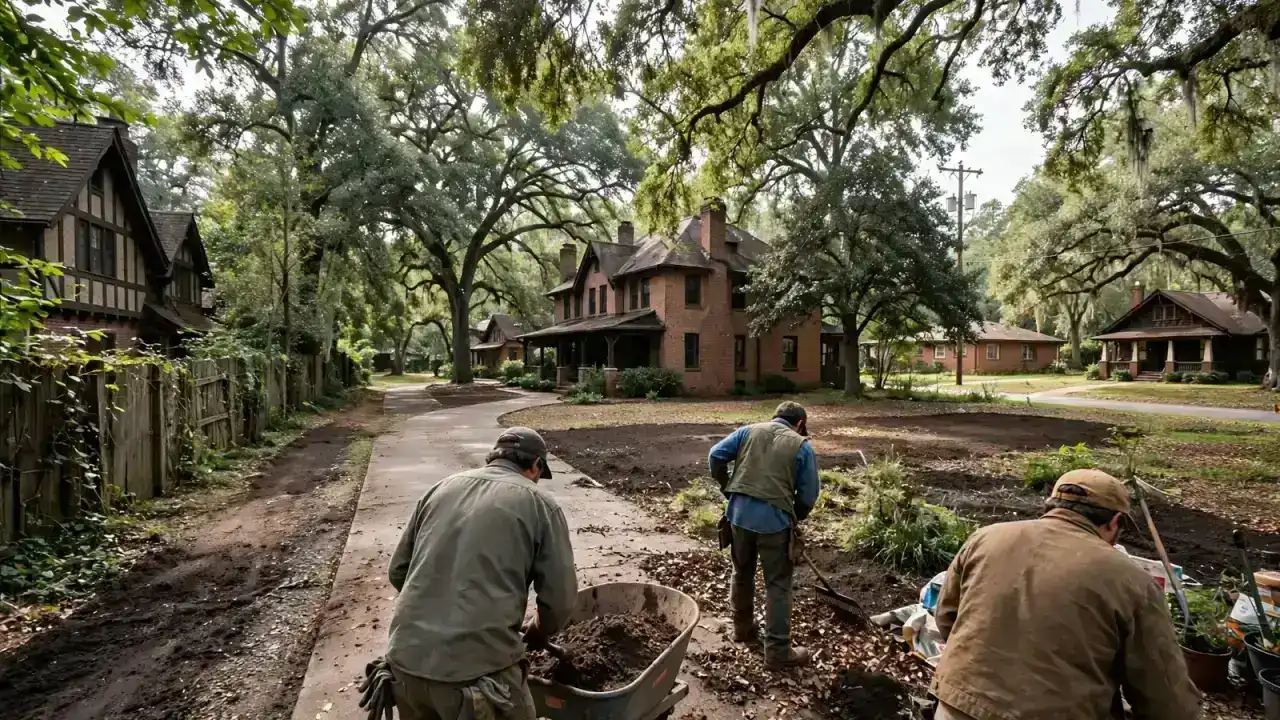
M Streets back yards are compact, so even a short trench affects a large share of the space. Trenchless pits keep most of the yard intact. Where excavation is needed, crews stockpile soil on tarps, protect plantings and restore turf and beds afterward. Ask what restoration is included.
After an M Streets repair
Keeping an M Streets lateral in good shape
After a repair, keep the video and permit record, avoid grease and wipes, and check the line occasionally if trees grow along the alley. If you rent the house, share simple drain-use rules with tenants. A cleanout near the back door makes any future service quick.
Front-yard connections
M Streets blocks with street sewers
Not every M Streets block drains to the alley. Some houses connect to mains under the street in front. A camera and locator show which. Front-yard laterals pass under walkways and front gardens instead of garages and fences, which changes how repairs are planned.
M Streets timing
Planning sewer work around M Streets life
The M Streets is busy, with narrow streets, parked cars and alley traffic. Scheduling excavation on weekdays, giving neighbors notice and avoiding trash collection days in the alley help the work go smoothly. Late spring is a good time to clear roots before the summer peak.
Old cast iron in M Streets kitchens
Cast iron kitchen drains in M Streets cottages
Kitchen drains in original cottages are often cast iron running under the floor to the main. Decades of grease and scale narrow them. If the kitchen sink keeps backing up while bathrooms drain well, the kitchen branch may be the problem rather than the lateral. A camera inspection from a kitchen cleanout tells you which.
M Streets and the Greenland Hills name
Greenland Hills and its sewer history
Greenland Hills was planned as a residential development with an orderly grid and alleys, which is why so many houses drain to the back. The consistency of the original construction means neighbors often face the same sewer issues at about the same time. If a neighbor has relined or replaced their lateral, their experience can be a useful reference for what to expect on your lot.
M Streets parking
Parking and equipment on M Streets blocks
Street parking is tight, so equipment often stages in the alley or driveway. Moving cars before the crew arrives keeps the work on schedule.
M Streets sewer questions
Questions about sewer lines in the M Streets
Do most M Streets homes drain to the alley?
Many do. A camera and locator confirm the route for your house.
Can a sewer line under my garage be fixed without demolishing it?
Often. Lining or pipe bursting can repair or replace the pipe from pits outside the garage.
Will a bigger addition overload my sewer line?
An old clay lateral with roots or sags may struggle. Inspect it before building.
Do conservation district rules affect sewer work?
Mainly visible exterior changes are governed. Underground work still needs a city plumbing permit.
Why do roots keep coming back in my line?
Clay joints remain open after cleaning. Lining or replacement seals them.
Is alley work disruptive to neighbors?
Briefly. Crews plan to keep alleys passable where possible.
Do all M Streets houses have the same sewer problems?
Many share similar original construction, so problems are often alike, but each lot's trees, garage and repairs differ. A camera shows yours.
Should I share my sewer video when selling?
Many sellers do. It answers buyers' questions about an old lateral and keeps negotiations factual.
Why does only my kitchen sink back up?
The kitchen branch may be clogged with grease or scale, separate from the main lateral. A camera inspection shows where.
Will repairs require taking down my fence?
Trenchless methods often avoid it. Excavation near a fence may require removing and reinstalling panels.
Are M Streets sewer lines usually original clay?
Many are, at least in part. A camera inspection shows how much original pipe remains.
Can a new cleanout be added near my back door?
Yes. A two-way cleanout near the house makes cleaning and inspection much easier.
Why does my kitchen back up more than my bathrooms?
Kitchen grease builds up in old pipe, especially where roots or rough joints catch it. The main lateral may also be restricted.
What should I tell the plumber about my M Streets house?
Whether the sewer runs to the alley, what sits over it, any additions and past repairs.