
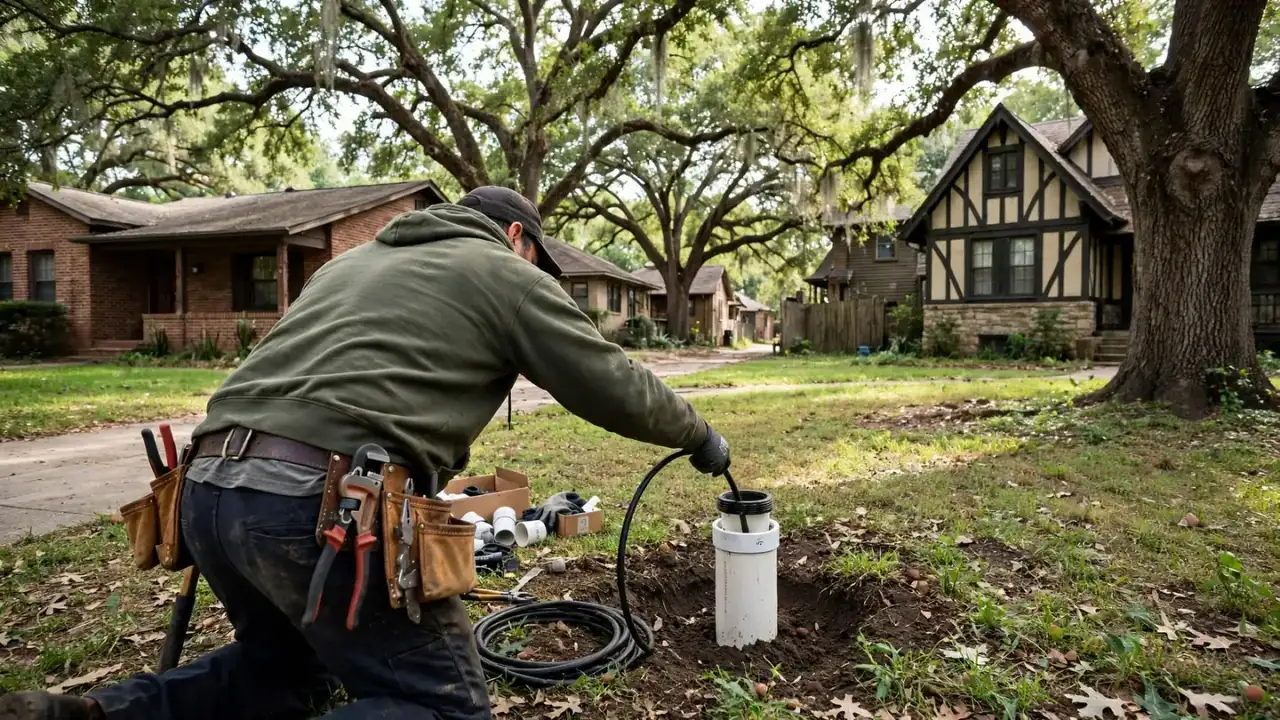
Dallas sewer line repair
Sewer line repair in Dallasfor clay soil, old pipe and big roots
Gurgling drains, sewage smell in the yard or a toilet backing up into the tub: in Dallas these usually trace to a cracked, sagging or root-filled sewer lateral. Call and your own call is connected to an independent local plumber who talks it through with you right then.
This number is a referral line; the plumbing is done by independent licensed plumbers.
- Camera inspection and locating
- Spot repairs, lining and full replacement
- Root intrusion and backups
- No forms and no follow-up marketing
- Call-in onlyYour call is connected straight to an independent plumber. Nothing to fill out.
- Written for Dallas soilGuides explain how expansive clay and drought move sewer pipe.
- Licensing explainedWe point you to the Texas plumbing licence lookup and permit basics.
- Straight answersRepair, lining or replacement explained without pressure.
Key facts: Sewer line repair in Dallas
- Under the Dallas City Code, the city builds the house lateral from its sewer main to the property or easement line, and the owner's plumber installs the building sewer that connects to it [1].
- Plumbing work in Texas, including sewer lines, must be done by plumbers licensed by the Texas State Board of Plumbing Examiners [2].
- Much of Dallas sits on Houston Black clay, a soil that swells when wet and shrinks sharply in drought [3].
- Orangeburg pipe, a tar-impregnated fiber pipe used for sewers until the 1970s, tends to deform and fail over time [4].
Before and after ideas
Six common Dallas sewer jobs
Illustrative AI images showing the kind of change each job makes. They are not photos of completed jobs.
- BeforeAfter
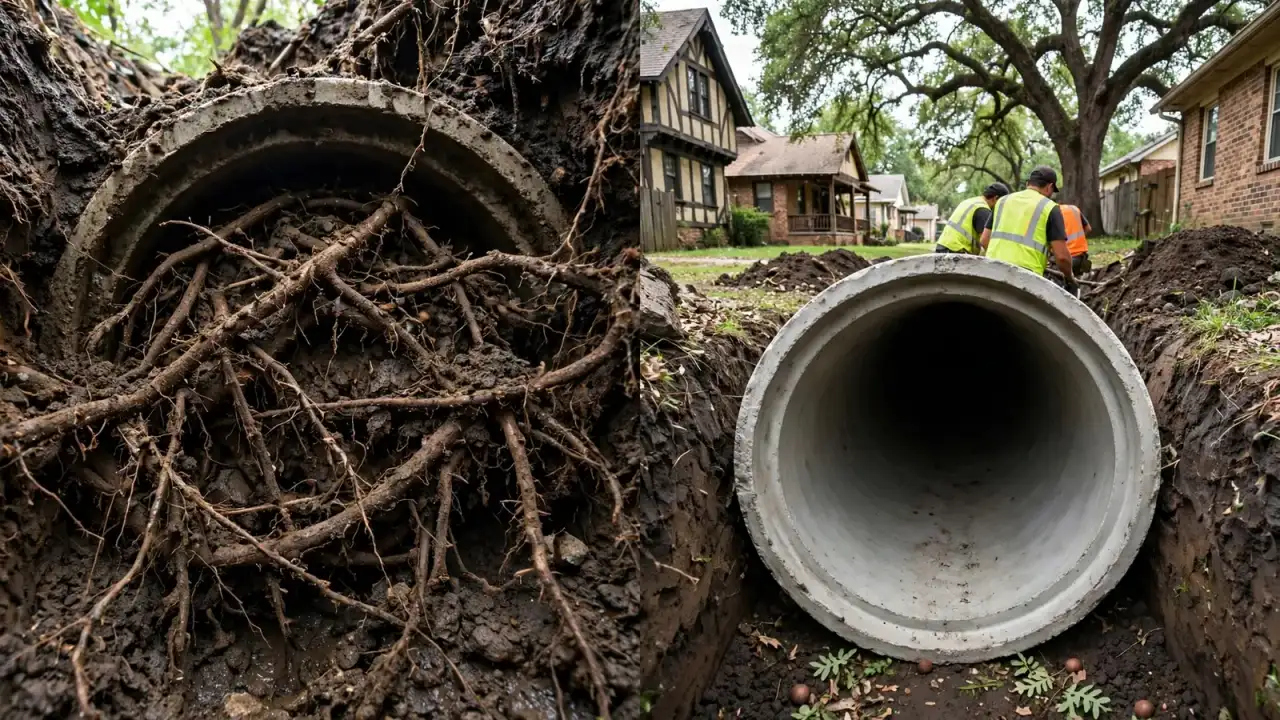
Root removal
Root mass cut out of a clay joint.
- BeforeAfter
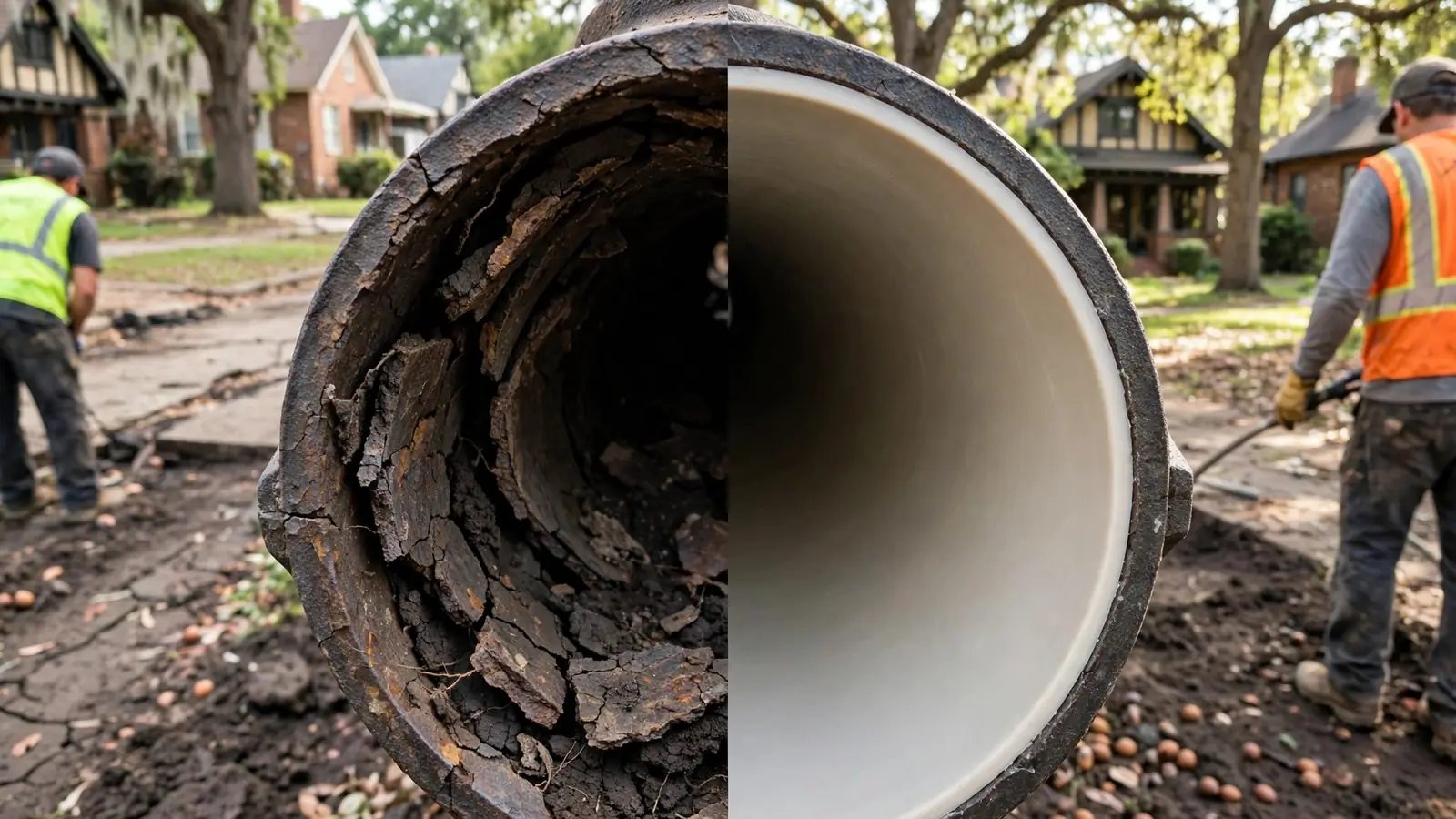
Pipe lining
A cured liner sealing a cracked line.
- BeforeAfter
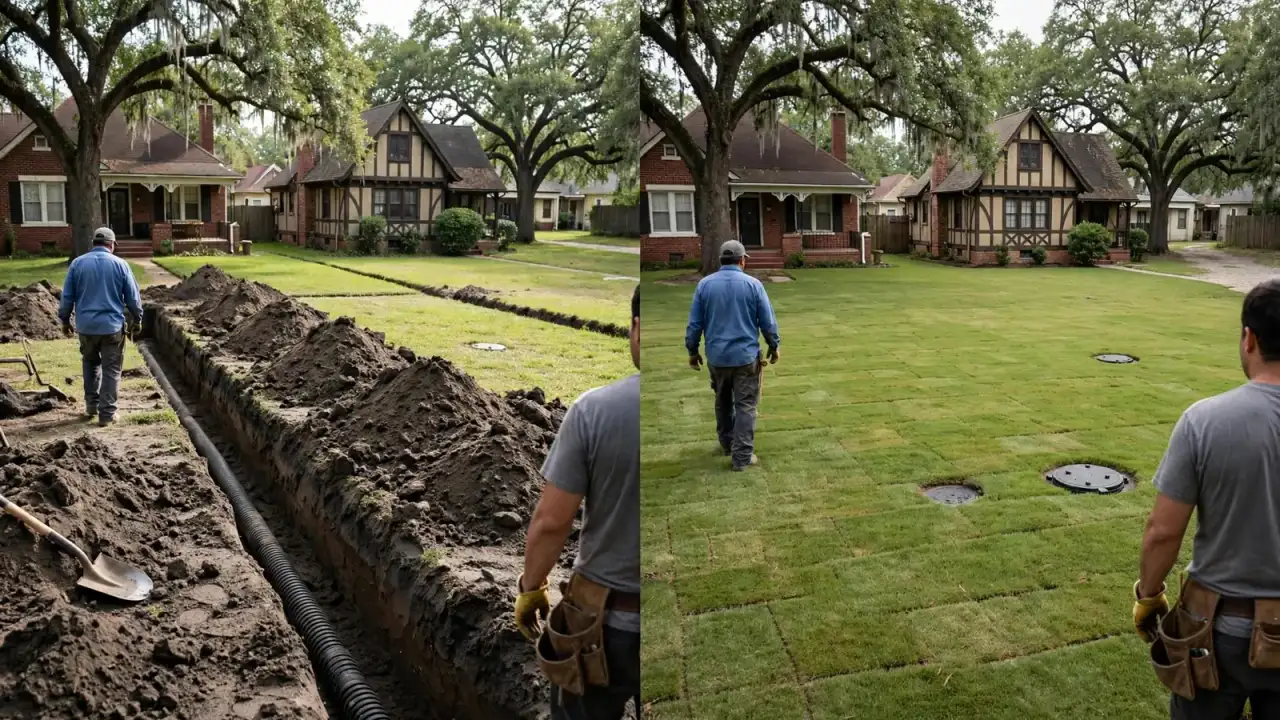
Trenchless approach
Small pits instead of a long trench.
- BeforeAfter
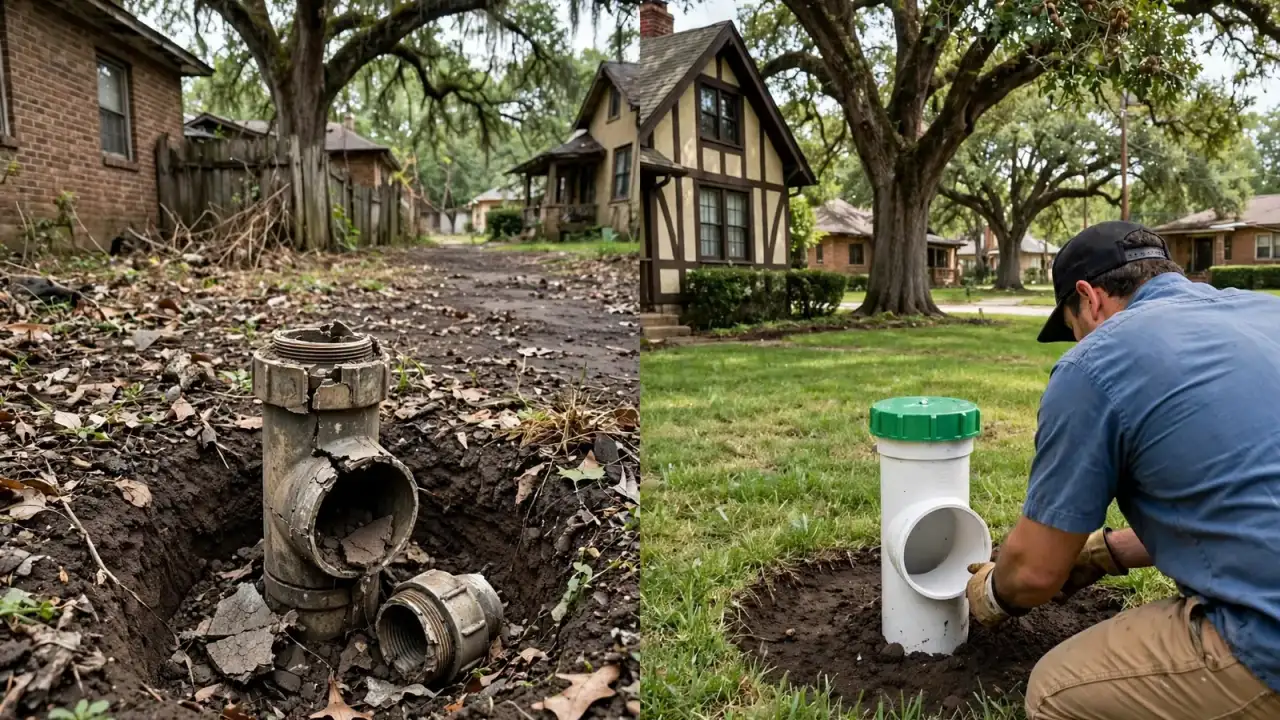
New cleanout
Access added for future service.
- BeforeAfter
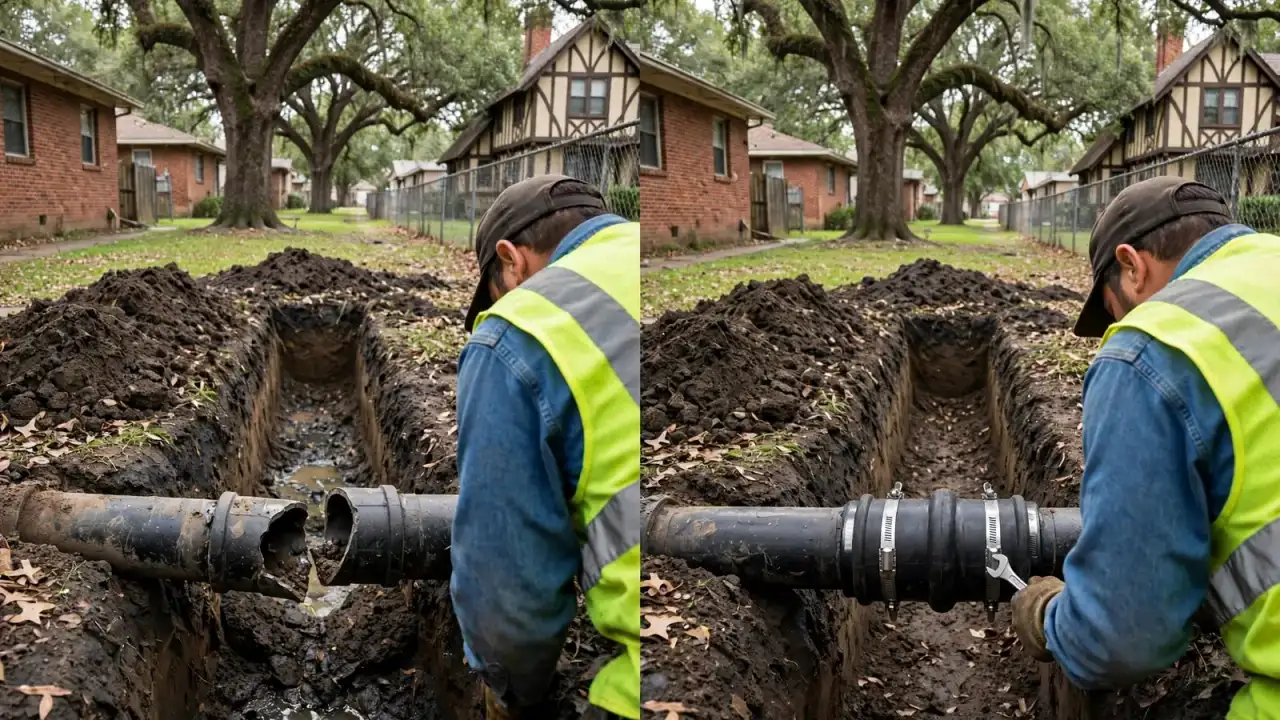
Spot repair
A shifted joint cut out and coupled.
- BeforeAfter
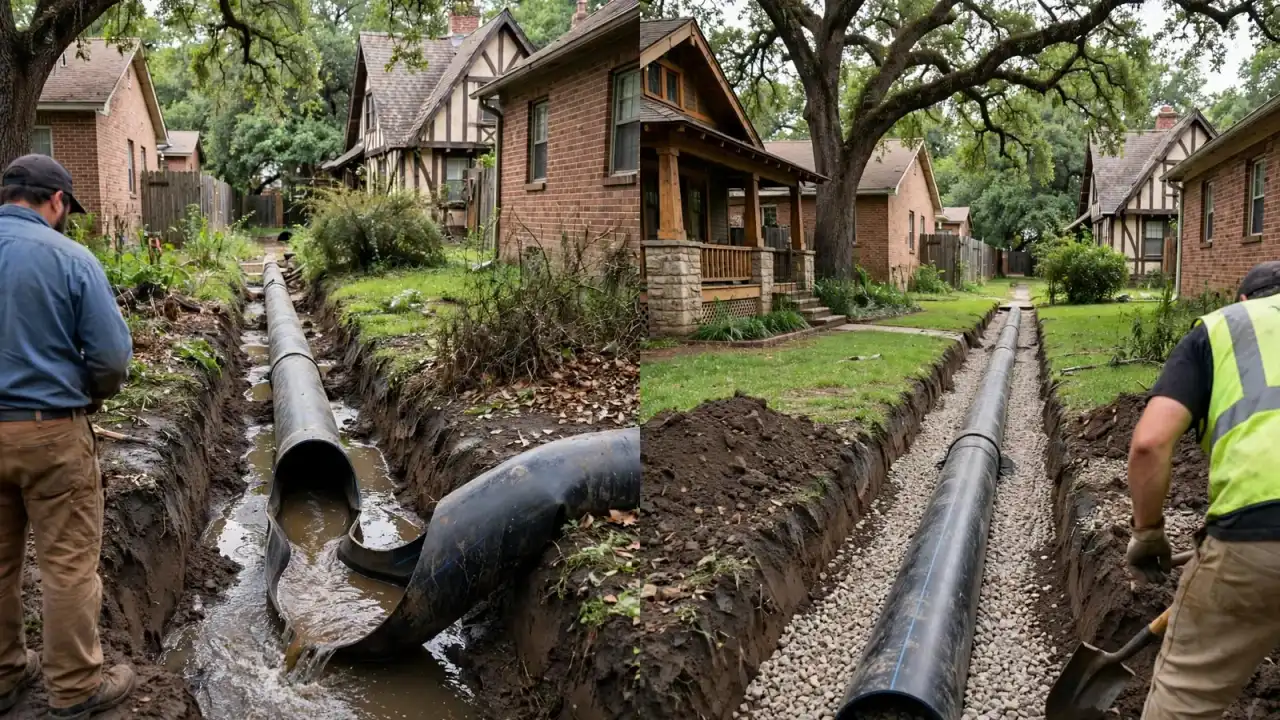
Belly correction
A low spot re-laid at proper slope.
Illustrative images. Every installation depends on the space and the equipment chosen.
From call to finished line
What a typical sewer repair involves
- 1
Your call
You describe symptoms and the house. The plumber tells you what they would check.
- 2
Clear and inspect
If you arrange a visit, they clear any blockage and run a camera through the line.
- 3
Locate and explain
They mark the problem on the ground and walk you through the video.
- 4
Permit and 811
For repairs that require it, they handle the plumbing permit and utility locates.
- 5
Repair
Roots are removed, a section is replaced, the pipe is lined or burst, or a trench is dug.
- 6
Test and restore
The line is tested and often re-filmed, inspected where required, then the ground is backfilled.
Neighborhoods
Dallas neighborhoods we connect callers in
Coverage follows the plumbing network's Dallas ZIP codes. Each neighborhood page explains the housing, soil, trees and sewer layout that matter there.
 Service area
Casa View
Sewer help for Casa View's 1950s ranch homes in East Dallas: cast iron and older laterals, carports, alleys and clay soil. Call a licensed plumber.
Learn more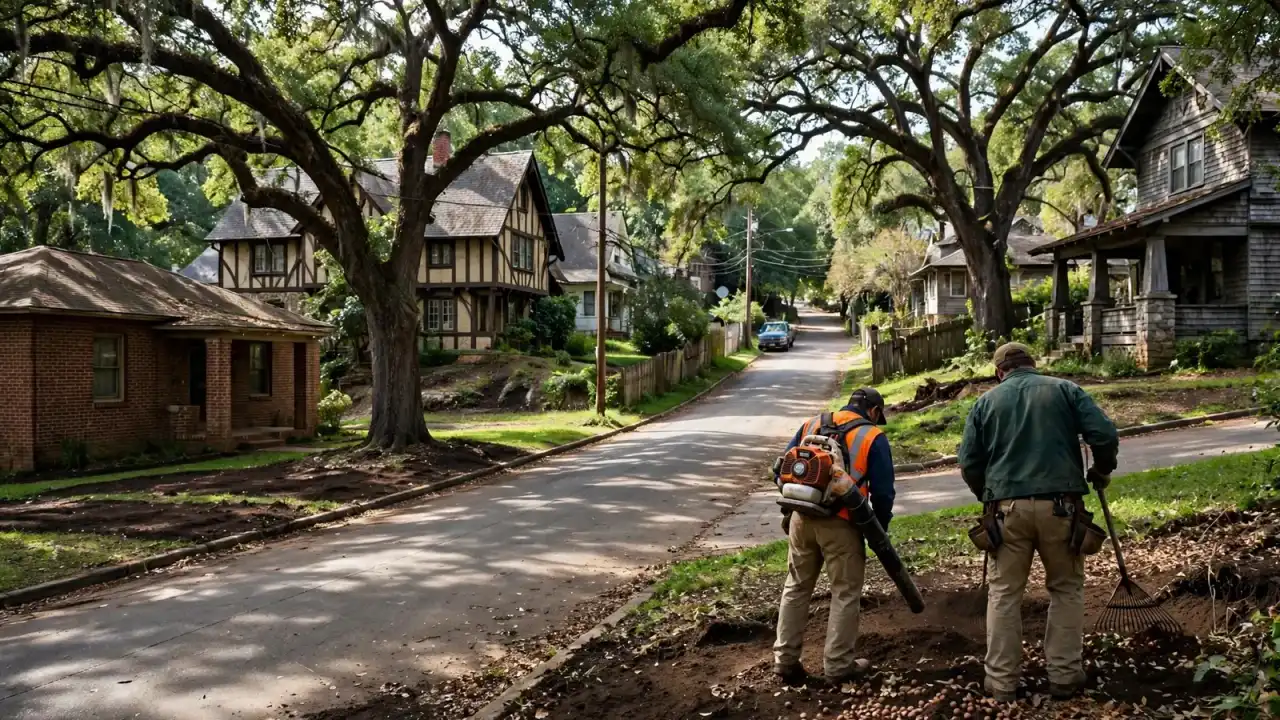 Service area
Kessler Park
Sewer help for Kessler Park and North Oak Cliff homes on hilly lots: long laterals, slopes, creek-side trees and older clay pipe. Call a licensed plumber.
Learn more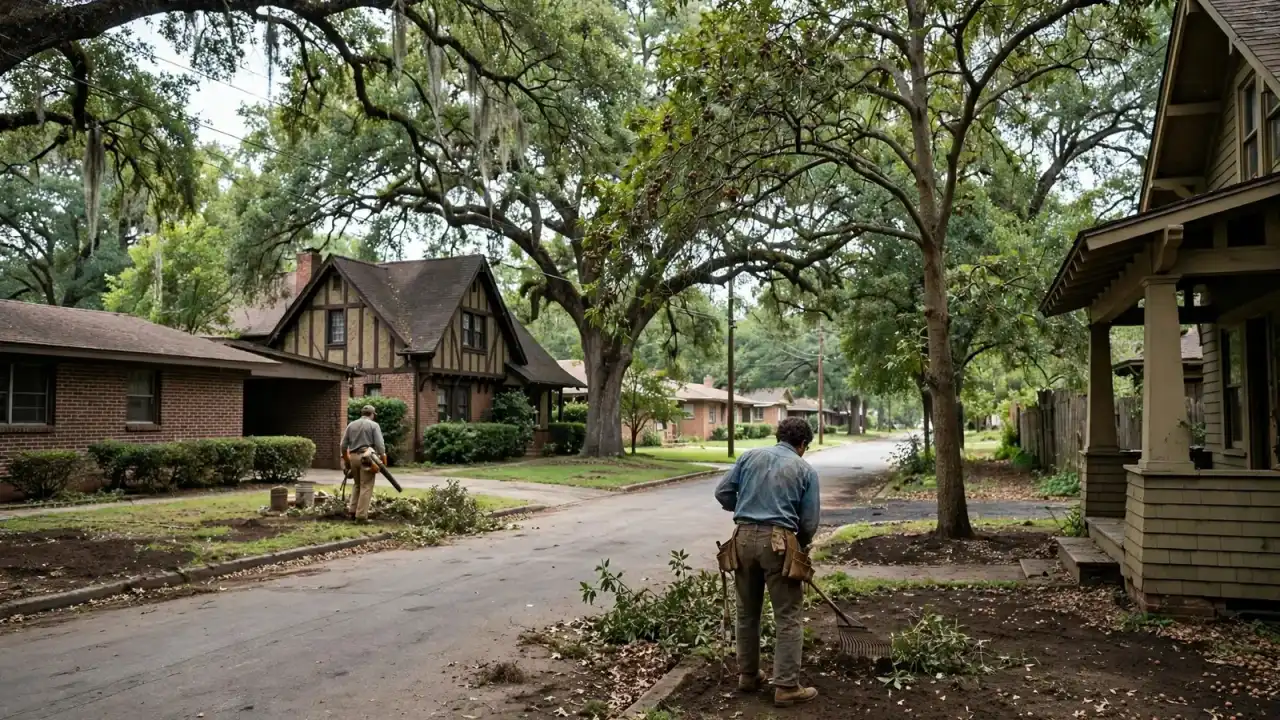 Service area
Lake Highlands
Sewer help for Lake Highlands' 1950s-1970s slab homes: cast iron under the slab, clay soil, tree roots and lateral repair. Call a licensed plumber.
Learn more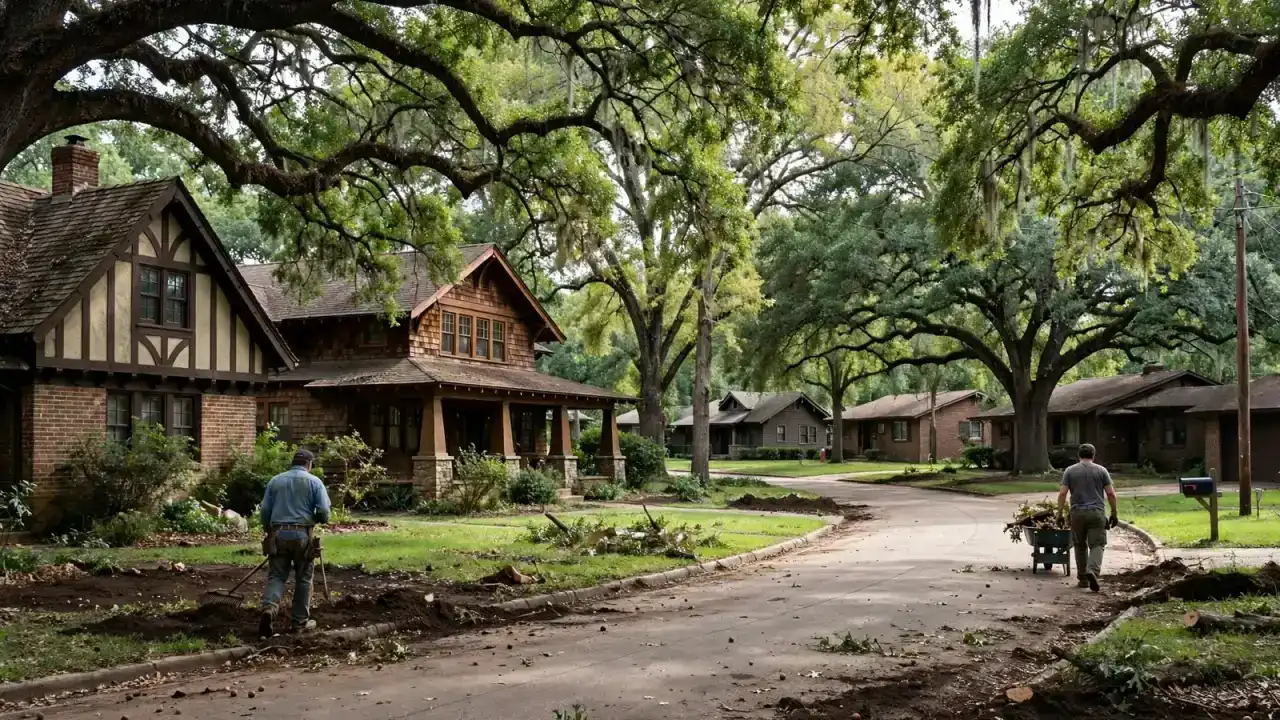 Service area
Lakewood
Sewer line help for Lakewood's 1920s-1940s homes near White Rock Lake: clay laterals, big trees, alley sewers and pier-and-beam foundations.
Learn more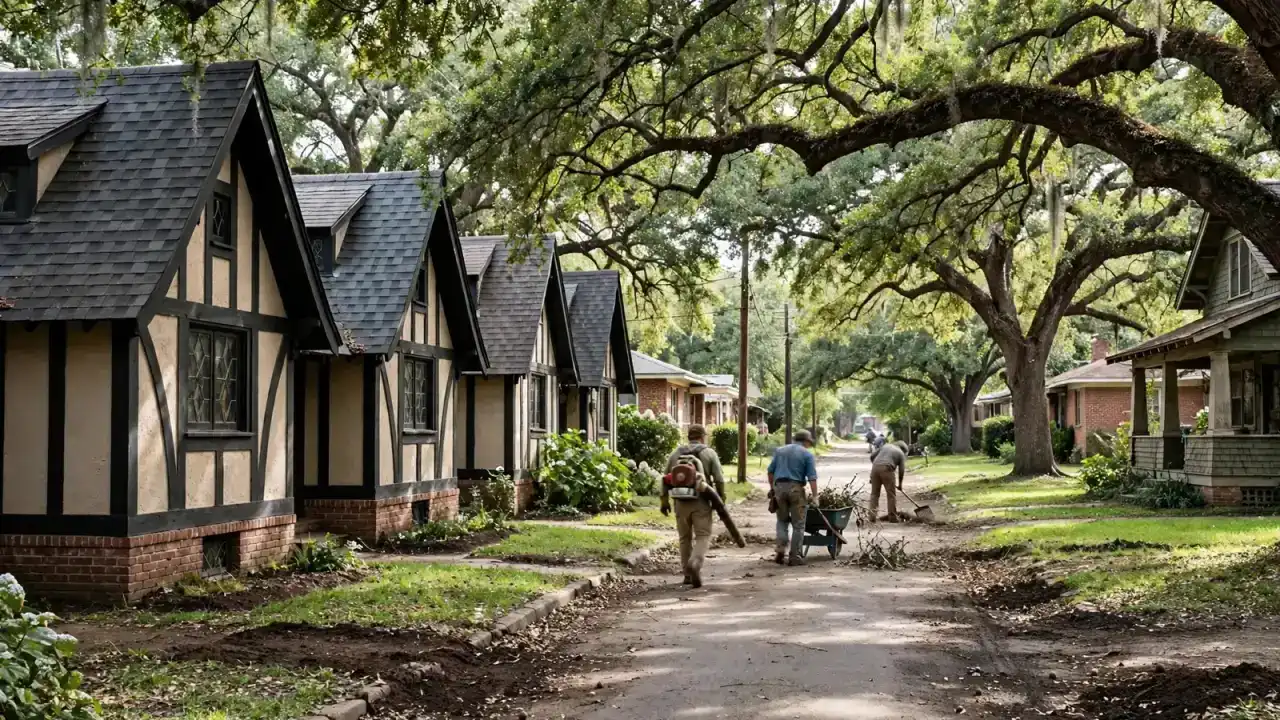 Service area
M Streets
Sewer help for M Streets Tudor cottages in Greenland Hills: alley-side clay laterals, roots, garages over lines and tight lots. Call a licensed plumber.
Learn more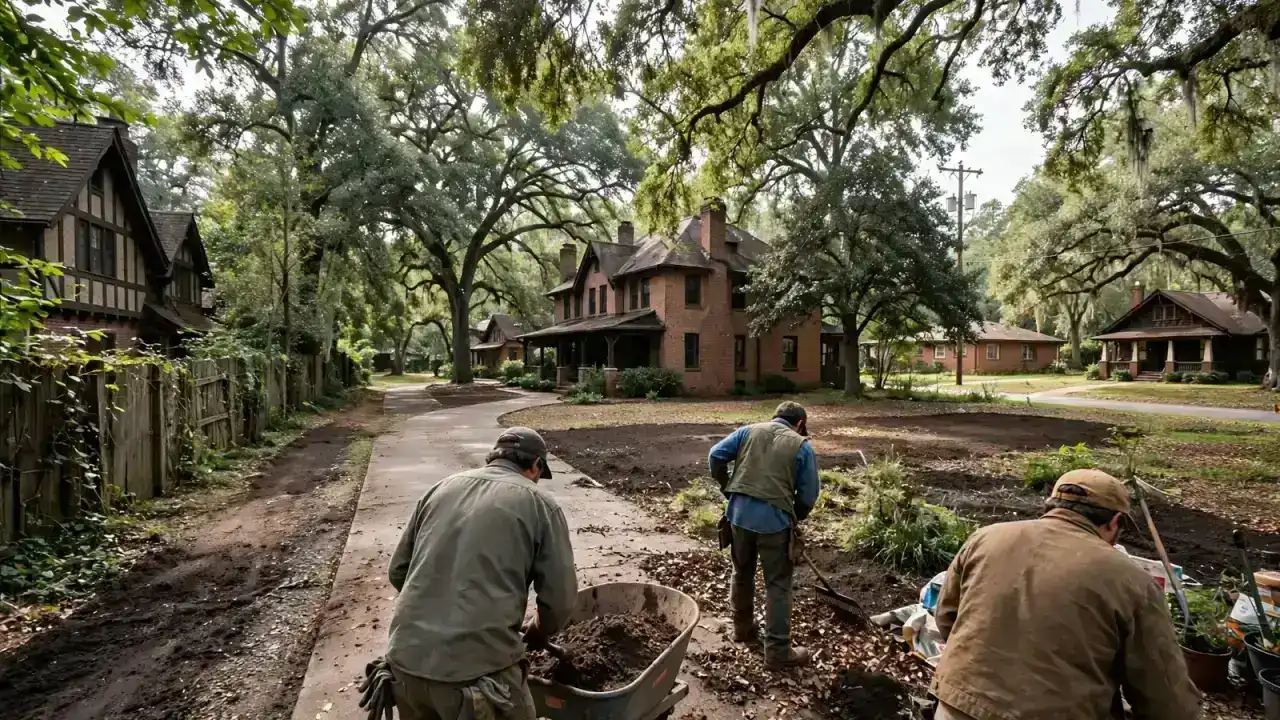 Service area
Preston Hollow
Sewer help for Preston Hollow homes on large wooded lots: long laterals, big trees, rebuilds on old lines and trenchless options. Call a licensed plumber.
Learn more
Which repair fits?
Matching the repair to the problem
| Camera shows | Usually points to | Why |
|---|---|---|
| Roots at one or two joints, pipe otherwise sound | Root cutting and maintenance | Roots can be cleared if the pipe is intact |
| One cracked or offset section | Spot repair | Replacing a short section fixes the defect |
| Many cracks but the pipe holds its shape | Cured-in-place lining | A liner seals cracks without digging the whole line |
| Orangeburg, collapsed or badly broken pipe | Pipe bursting or open-trench replacement | The old pipe cannot carry a liner |
| A low belly holding water | Excavate and re-lay that section | Lining follows the sag and does not fix slope |
| Line runs under the slab and leaks | Tunnel, slab cut or reroute | The repair depends on access under the house |
Dallas specifics
What makes sewer repair in Dallas different
Dallas sits largely on dark, heavy Blackland Prairie clay. [3] It swells when it soaks up water and shrinks and cracks when it dries, sometimes by a lot in a summer drought. Buried pipes move with it. Joints in old clay and cast iron pipe separate, sections drop out of alignment, and low spots form that hold water and solids.
Trees add to the stress. Live oaks, cedar elms, pecans and other big shade trees in neighborhoods like Lakewood, Preston Hollow and Kessler Park send roots far, and those roots find the moisture leaking from any crack or joint. Many Dallas sewer calls start with roots.
House age matters. Homes built before the 1970s often have clay, cast iron or Orangeburg laterals. [4] Post-war ranch houses frequently have cast iron drains under the slab that have corroded over decades. Newer homes usually have PVC, which resists roots and corrosion but can still shift or crack in moving clay.
Rules matter too. Plumbers in Texas must be licensed by the Texas State Board of Plumbing Examiners, and sewer repairs and replacements in Dallas generally need a city plumbing permit and inspection. [2] Calling 811 before digging is required.
Sewer guides
Read before you call
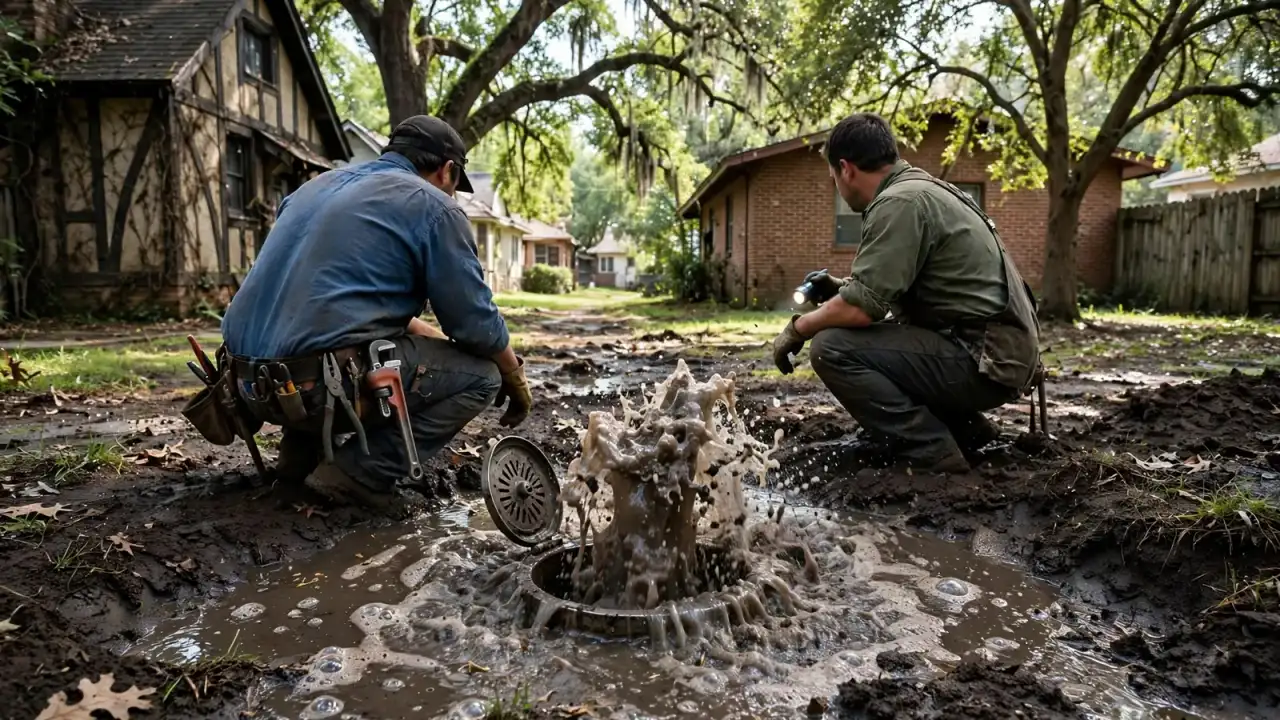 Guide
Sewer backup in the house
What to do when sewage backs up into a Dallas home: stop using water, stay safe, find the cleanout, get the line cleared and understand the cause.
Read the guide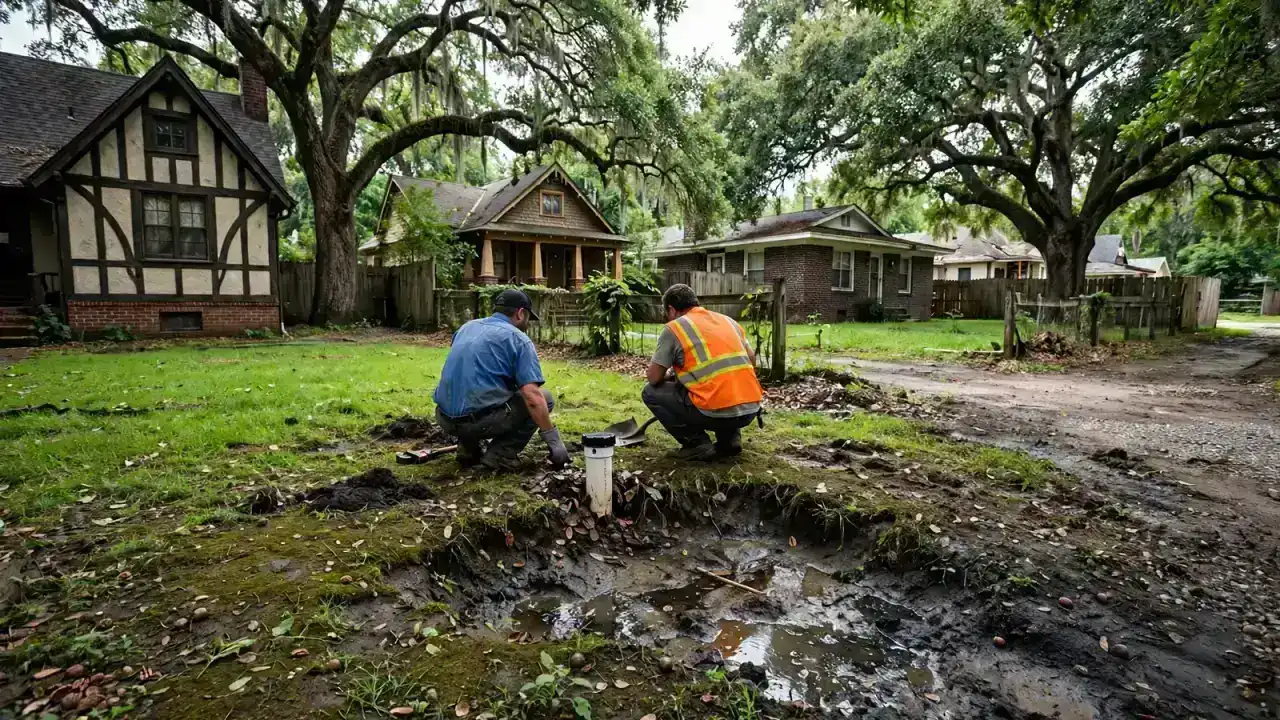 Guide
Sewer smell in the yard
Why your Dallas yard smells like sewage: leaking laterals, open cleanouts, vent issues and city lines. How to check safely and when to call a plumber.
Read the guide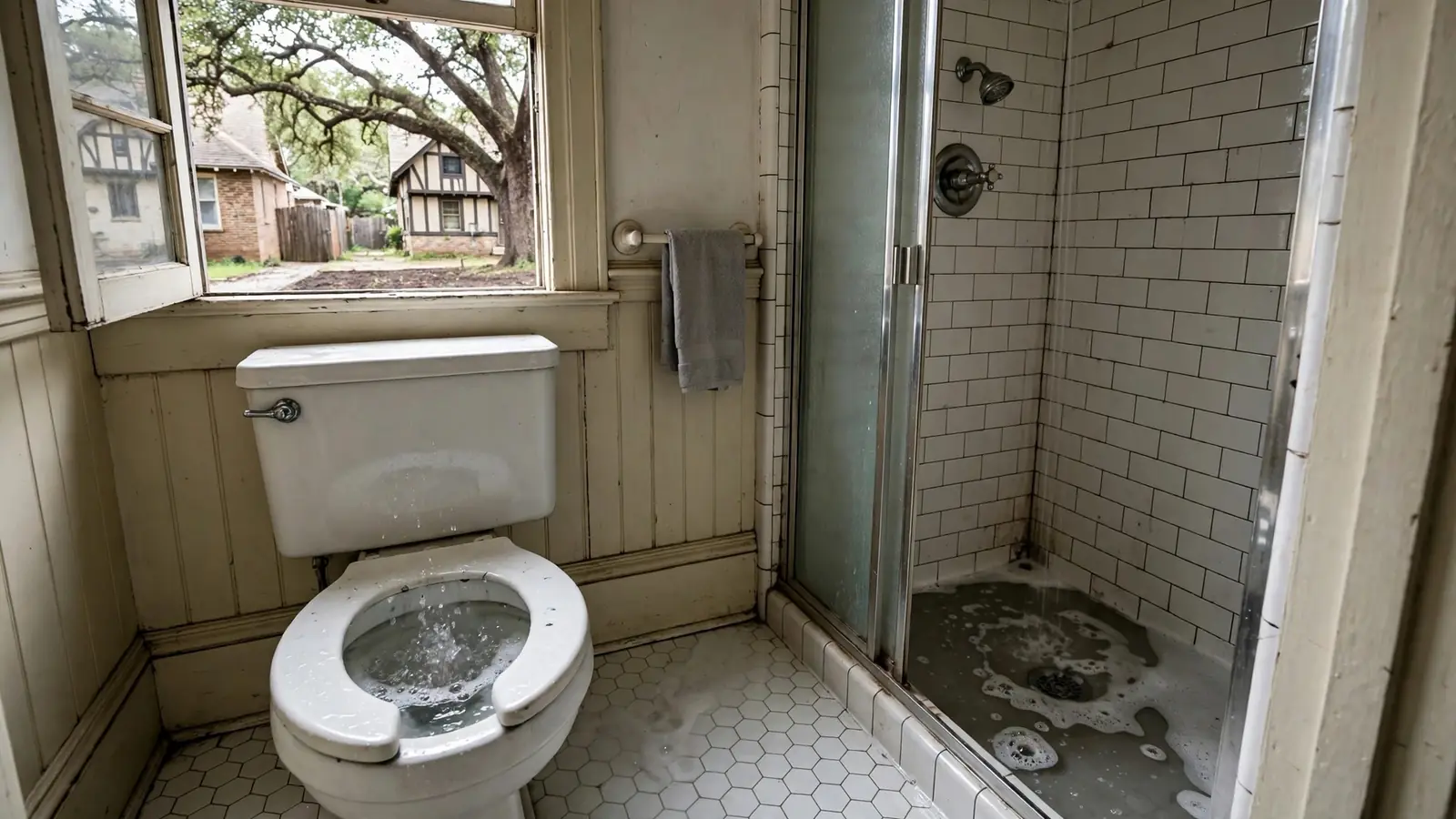 Guide
Signs of a broken sewer line
The warning signs of a broken or failing sewer lateral in a Dallas home: gurgling, backups, smells, soggy spots, lush grass and foundation clues.
Read the guide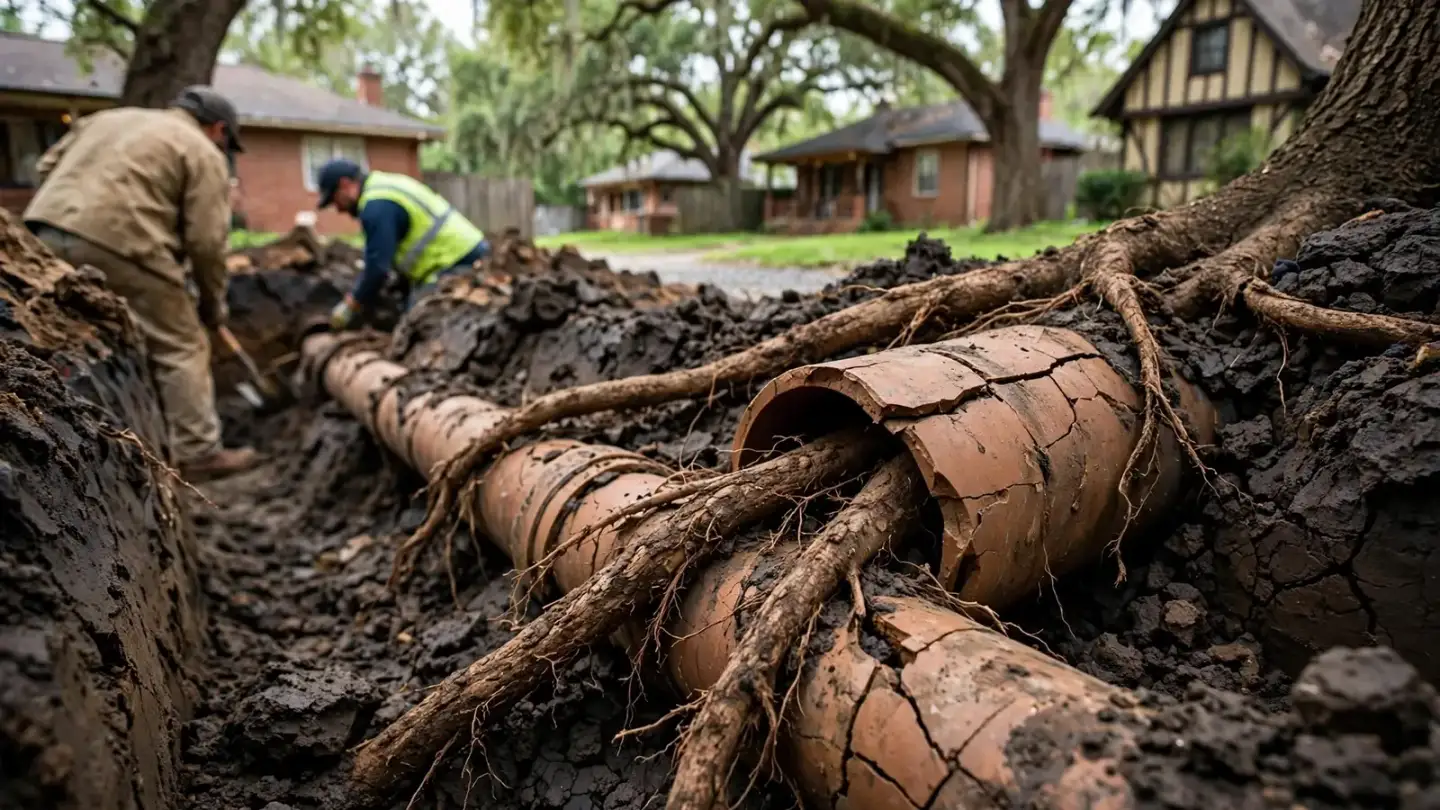 Guide
Tree roots in the sewer line
How tree roots get into Dallas sewer lines, the signs, why they come back after cleaning, and the permanent fixes that keep them out.
Read the guide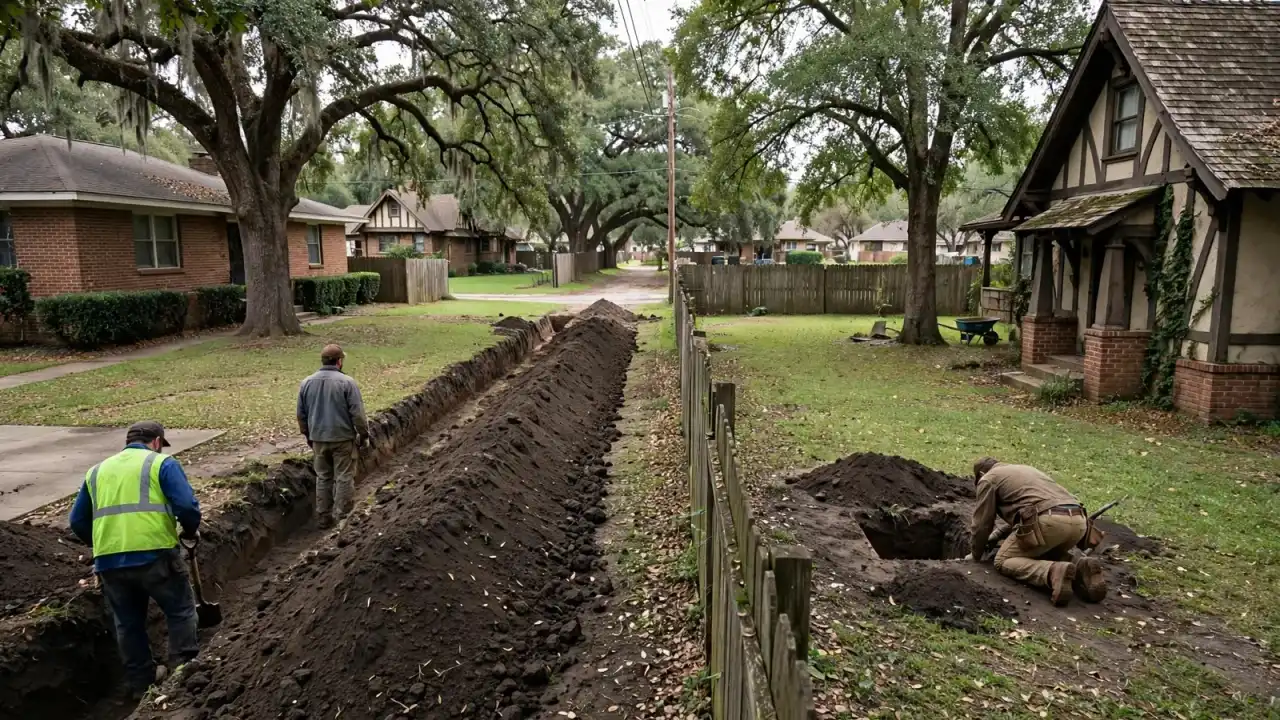 Guide
Trenchless vs excavation
Comparing trenchless sewer repair with traditional excavation for Dallas homes: when each fits, what the camera decides, and how yards and trees fare.
Read the guide
Spot the problem
What is your sewer line telling you?
Pick the symptom closest to what you are seeing. Each guide explains the likely cause and what a plumber checks first.
Several drains slow or gurgling
When more than one fixture backs up, the problem is usually in the main line, not a single drain.
Read moreSewage coming up in a tub or shower
The lowest fixture overflows first when the lateral is blocked.
Read moreRoots or a big tree near the line
Roots find cracks and joints, then fill the pipe.
Read moreSewer smell or soggy ground outside
A broken lateral can leak into the yard.
Read moreDeciding how to fix it
Trenchless and open-trench repairs each fit different situations.
Read more
What we connect you for
Sewer services across Dallas
Inspection, repair, replacement, root removal and [backup cleanup](/services/sewer-backup-cleanup/). Every call goes to an independent licensed plumber who explains the options on that call.
Root Intrusion Removal
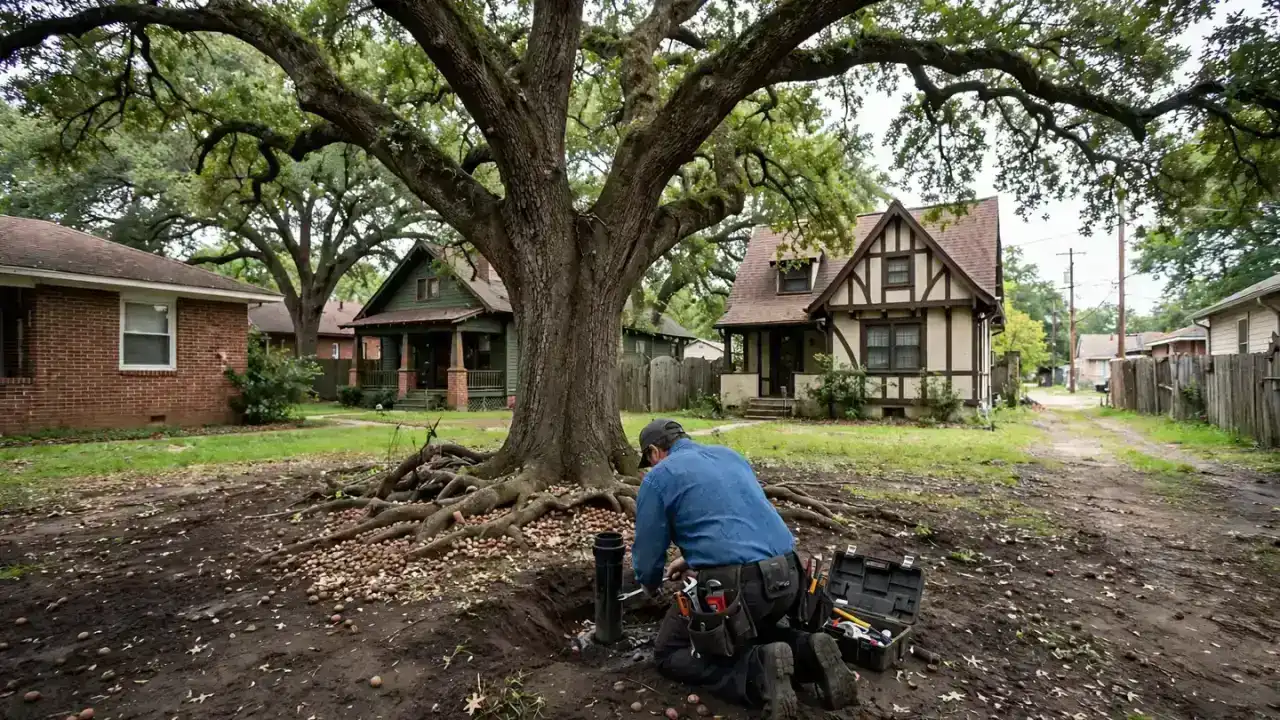
Tree roots in Dallas sewer lines: cutting, jetting, camera checks, root control and permanent fixes like lining or replacement. Talk to a licensed plumber.
Explore service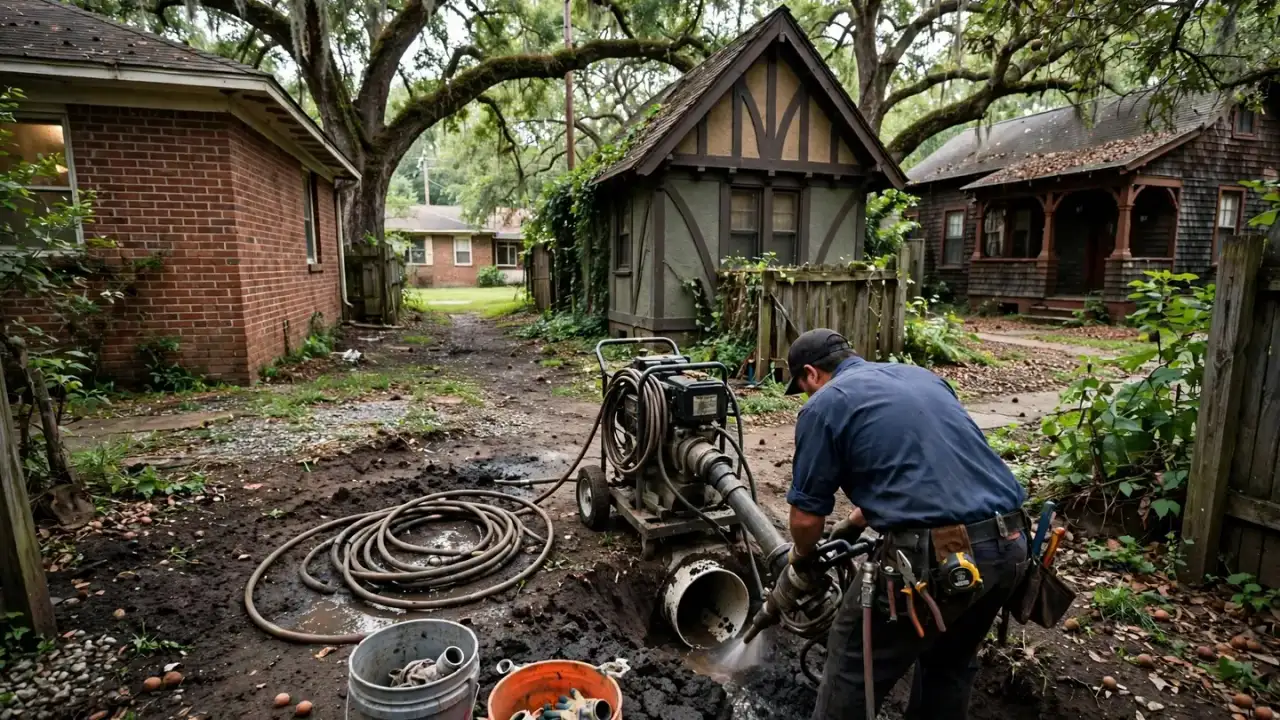
Sewer Backup Cleanup
What to do when sewage backs up in a Dallas home: safety, clearing the line, cleanup of contaminated areas and finding the cause. Call a plumber.
Explore service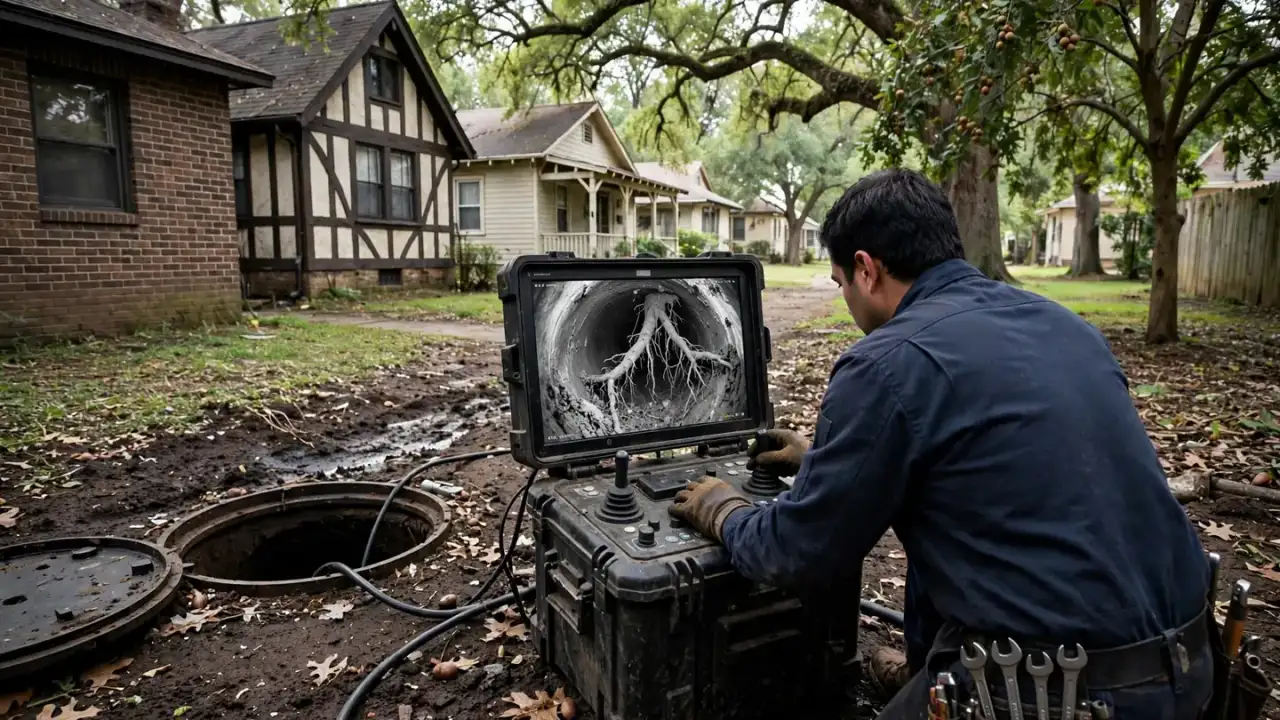
Sewer Camera Inspection
Video inspection of Dallas sewer laterals: finding roots, cracks, bellies and offsets, locating depth and choosing the right repair. Call now.
Explore service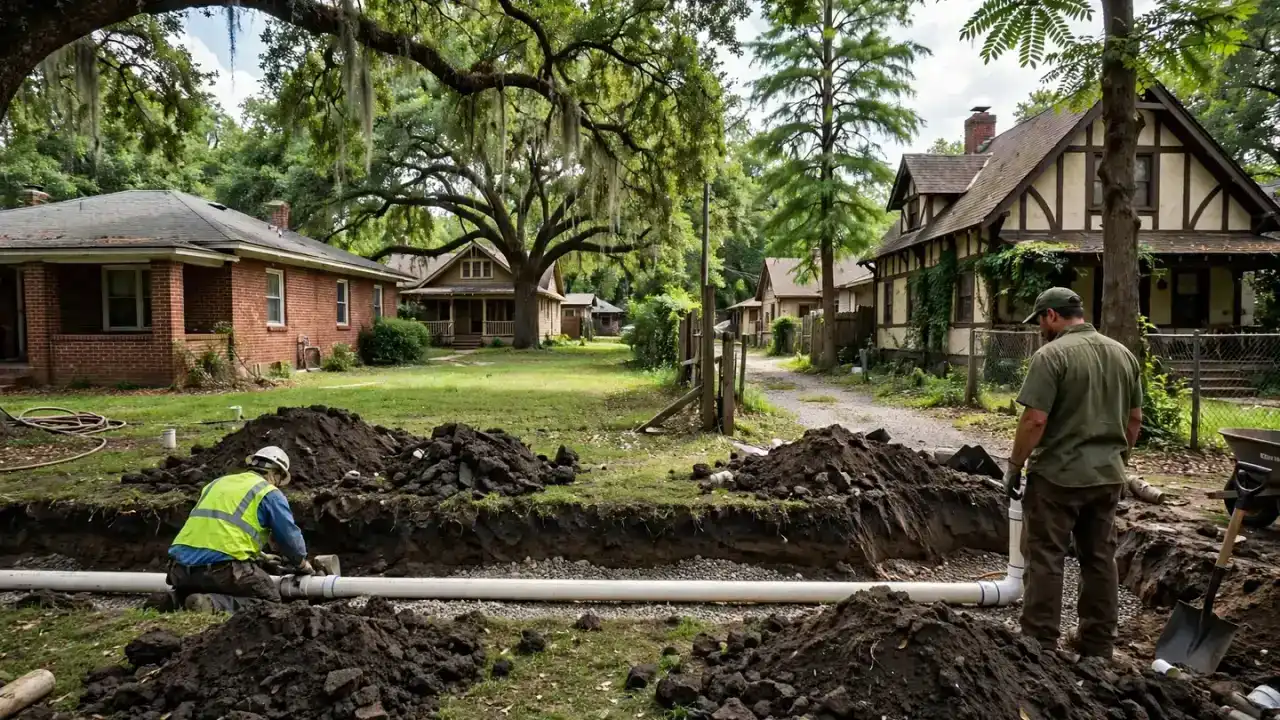
Sewer Line Replacement
Full sewer lateral replacement for Dallas homes: when repair is not enough, open-trench and trenchless options, permits and slope. Call now.
Explore service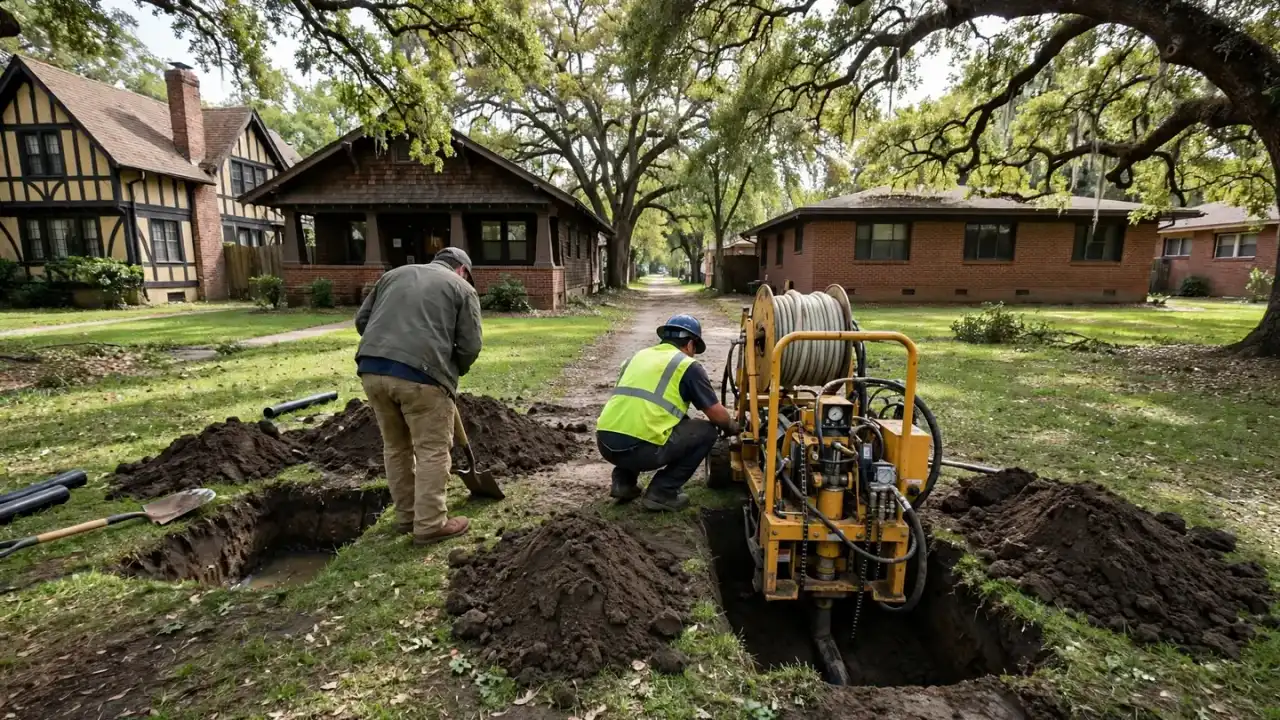
Trenchless Sewer Repair
Pipe lining and pipe bursting for Dallas sewer laterals: small access pits instead of long trenches, when each works and when it does not. Call a plumber.
Explore service
Before anyone digs or runs a machine down your line
If sewage is backing up into the house, stop using water: no flushing, laundry, dishwasher or showers. Every gallon you send down the drain has nowhere to go but the lowest fixture. Keep children and pets away from any sewage, and do not mix cleaning chemicals with it.
Before digging, Texas law requires a call to 811 so buried gas, electric and water lines are marked. A plumber doing excavation handles this, but it applies to you too if you plan any digging in the yard.
- Stop running water if drains back up
- Avoid contact with sewage and wash hands well
- Call 811 before any digging
- Ask for the plumber's Texas license number
How plumbers find the problem
What a sewer plumber checks first
A good diagnosis starts at the cleanout, the capped pipe usually found near the foundation or close to the property line. Opening it shows whether sewage is standing in the line, which tells the plumber whether the blockage is between the house and the cleanout or further toward the city main.
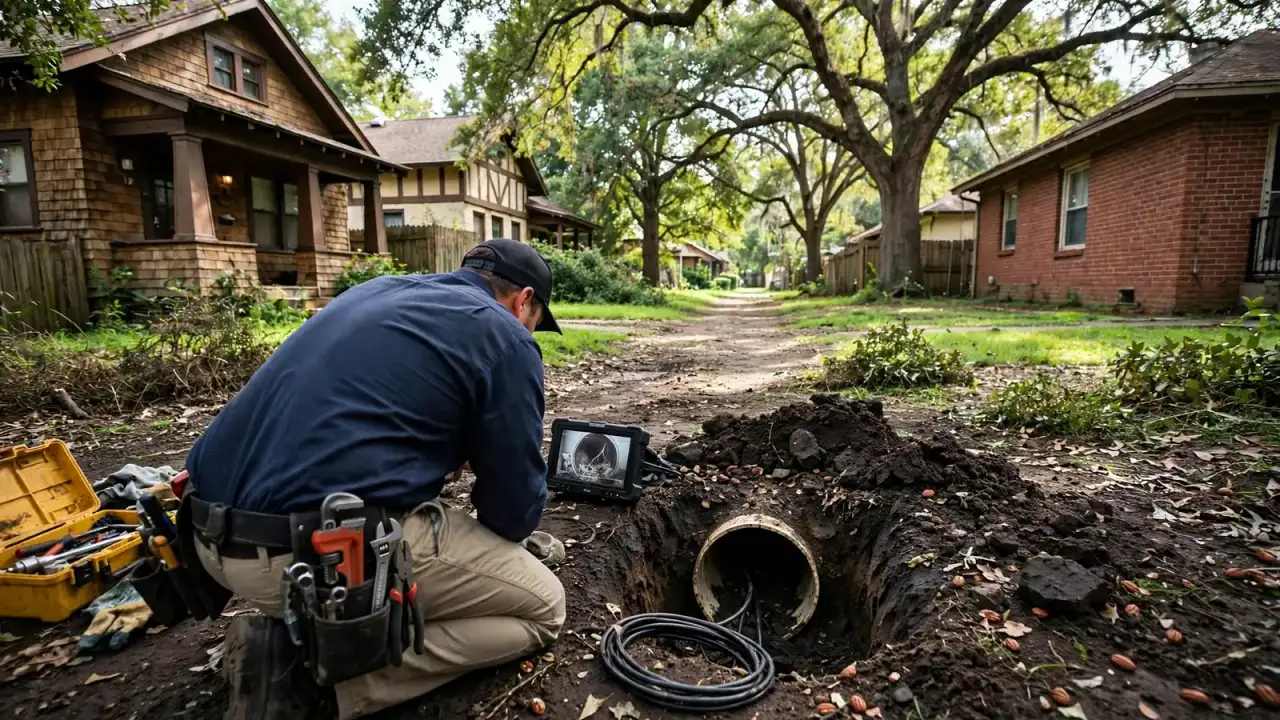
Then a camera goes in. A sewer inspection camera on a flexible push rod shows the inside of the pipe on a screen: roots at joints, cracks, offset sections where the clay has shifted, low spots that hold water, and collapsed segments. A locator on the camera head lets the plumber mark the exact spot and depth on the ground above.
With the video and the location, the repair options become clear: clearing roots, a spot repair, a liner, pipe bursting or a full open-trench replacement.
- Cleanout check for standing water
- Camera video of the whole lateral
- Locating depth and position from above
- Matching the repair to what the video shows
Your call, step by step
How a call through this line works
You dial the number on this page. The call is routed to an independent, licensed plumber who handles sewer work in your part of Dallas, and you talk to them directly on that same call. Describe the symptoms, how old the house is and whether there are big trees near the line.
The plumber can tell you on the call what they would check first and whether it sounds like a clog, a root problem or a broken pipe. Anything you decide after that, such as a visit, is agreed between you and them during the call.
Nobody records your details for later, and nobody will text, email or phone you afterward because you called.
- Nothing to fill in
- You speak with the plumber on your own call
- Visits are arranged between you and the plumber
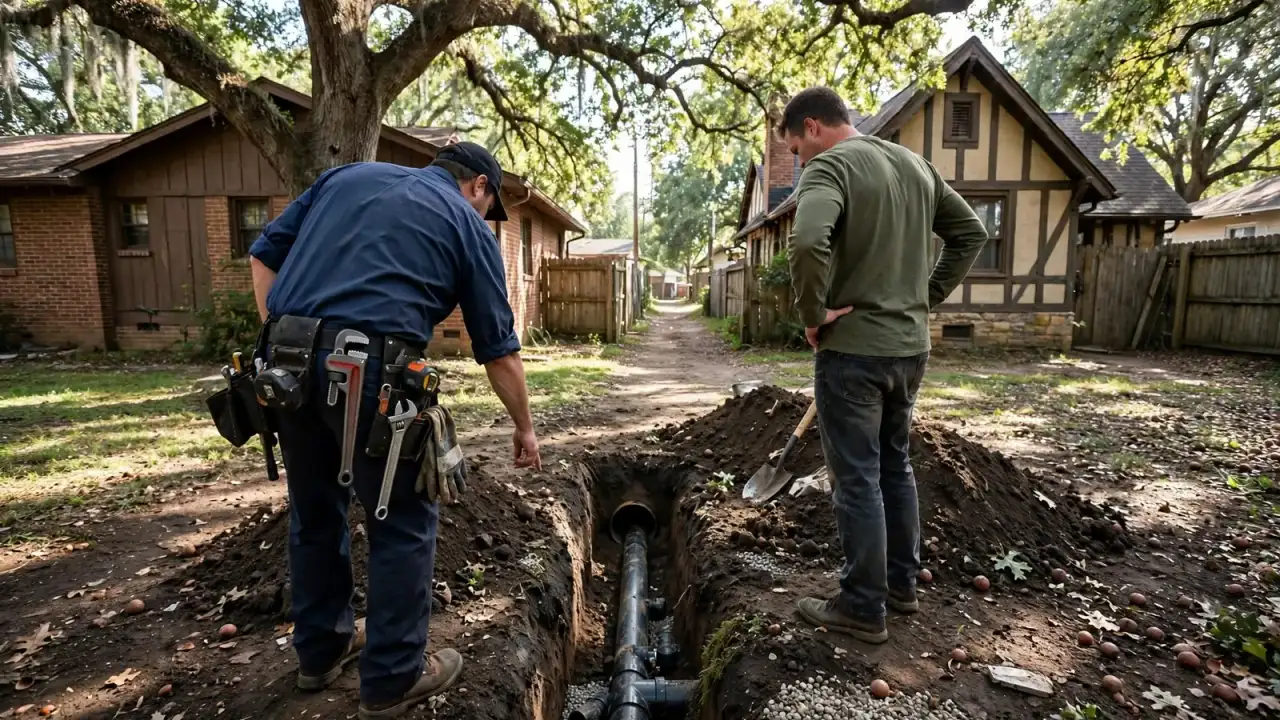
Illustrative repair
From cracked clay pipe to a new sewer lateral
An example of what replacing a failed section can look like. Illustrative image only, not a record of a specific job.
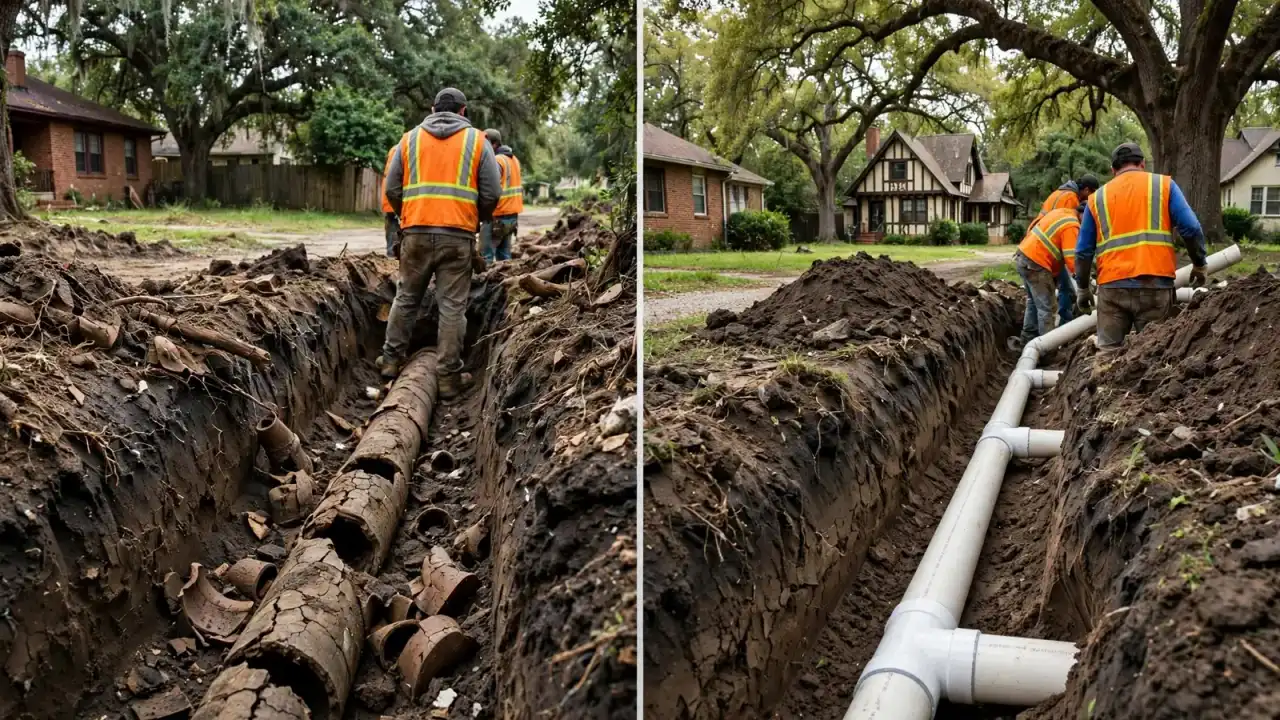 BeforeAfter
Common questions
Questions Dallas homeowners ask about sewer lines
Who is responsible for the sewer line from my house to the street in Dallas?
Generally the property owner is responsible for the building sewer from the house to where it connects with the city's lateral near the property or easement line. [1] Problems in the public main are the city's. A camera inspection shows where the blockage is.
How do I know if my sewer line is broken or just clogged?
A clog may clear and come back, while a broken line often brings repeated backups, sewage smells, soggy spots or roots. A camera inspection is the only reliable way to tell.
Do I need a permit to repair a sewer line in Dallas?
Sewer repairs and replacements generally need a plumbing permit and inspection from the City of Dallas. A licensed plumber pulls the permit and schedules the inspection.
Can a sewer line be fixed without digging up my yard?
Often. Lining and pipe bursting need only small access pits. They do not suit every pipe, such as a badly sagging or fully collapsed line.
Why do Dallas sewer lines break so often?
Expansive clay soil moves pipe as it swells and shrinks, older pipe materials age and crack, and big tree roots invade joints. Together they make laterals in older neighborhoods vulnerable.
Who actually does the work when I call?
An independent licensed plumber. Your call is connected to them and you speak with them directly. This site is a referral line and does not do the work.
What should I do if sewage backs up into my house?
Stop using water, keep people and pets away from the sewage, and call a plumber. Do not use chemical drain cleaners on a backed-up main line.
How can I check a plumber's license in Texas?
The Texas State Board of Plumbing Examiners has a public license search. Ask for the plumber's license number on the call.
Ready when you are
Talk to a Dallas sewer plumber now
One call, no forms. Describe the symptoms and the house, and an independent licensed plumber will talk it through with you.
Sources and citations
Keep reading