
Key facts: Lakewood
- Lakewood is an East Dallas neighborhood near White Rock Lake that developed mainly in the 1920s through the 1940s [1].
- Vitrified clay sewer pipe, standard in that era, was laid in short sections whose joints can open as seals age [2].
- The owner's plumber maintains the building sewer up to the city's lateral near the property line under Dallas code [3].
- Sewer repair and replacement in Dallas generally require a city plumbing permit and inspection [4].
Lakewood coverage
Lakewood ZIP code covered
The plumbing network accepts calls from Lakewood's ZIP code. Coverage can change, so call to confirm.
- 75214: Lakewood and surrounding East Dallas streets, including the Lakewood Heights area, the blocks around the Lakewood shopping area and streets near White Rock Lake's western shore.
Lakewood housing
What Lakewood's houses are like
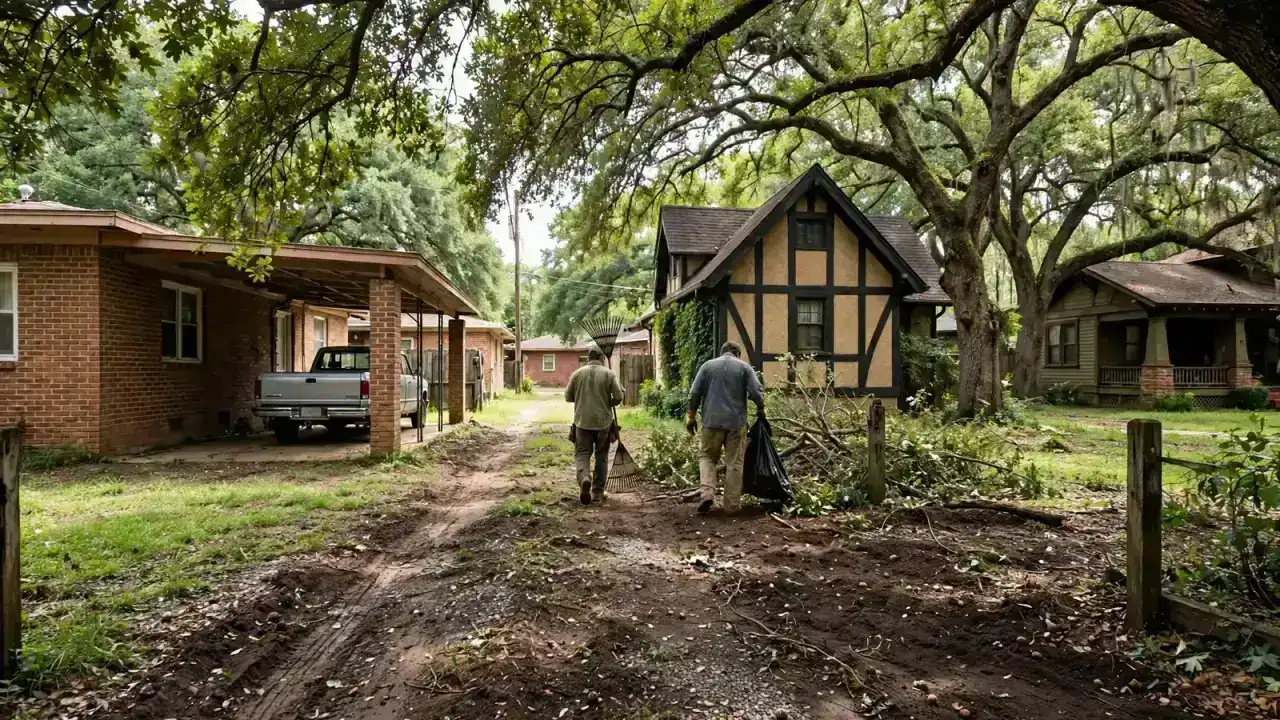
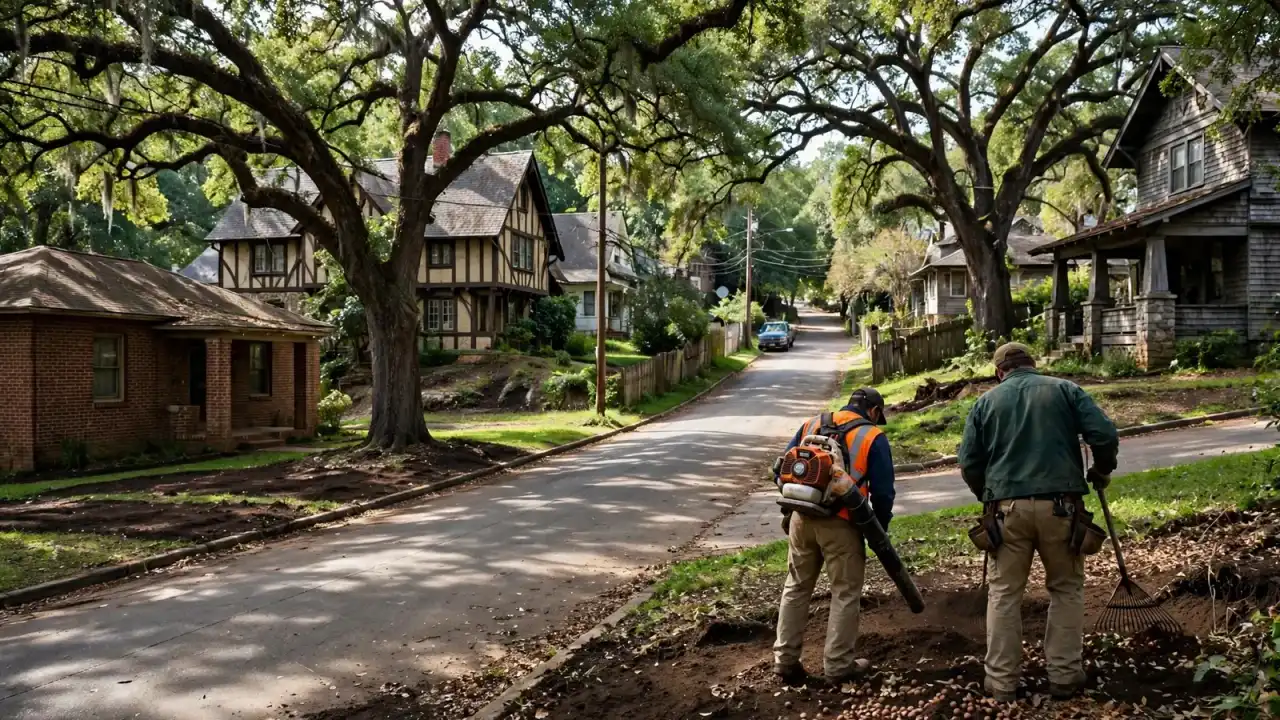
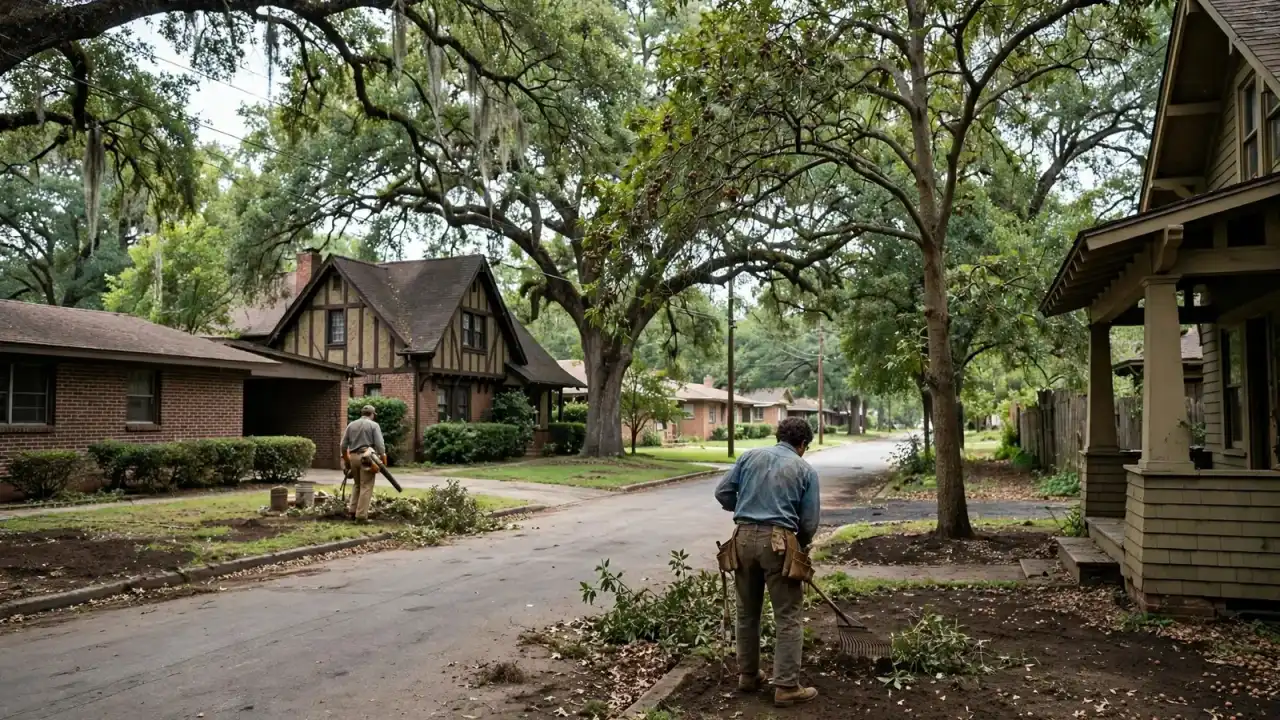
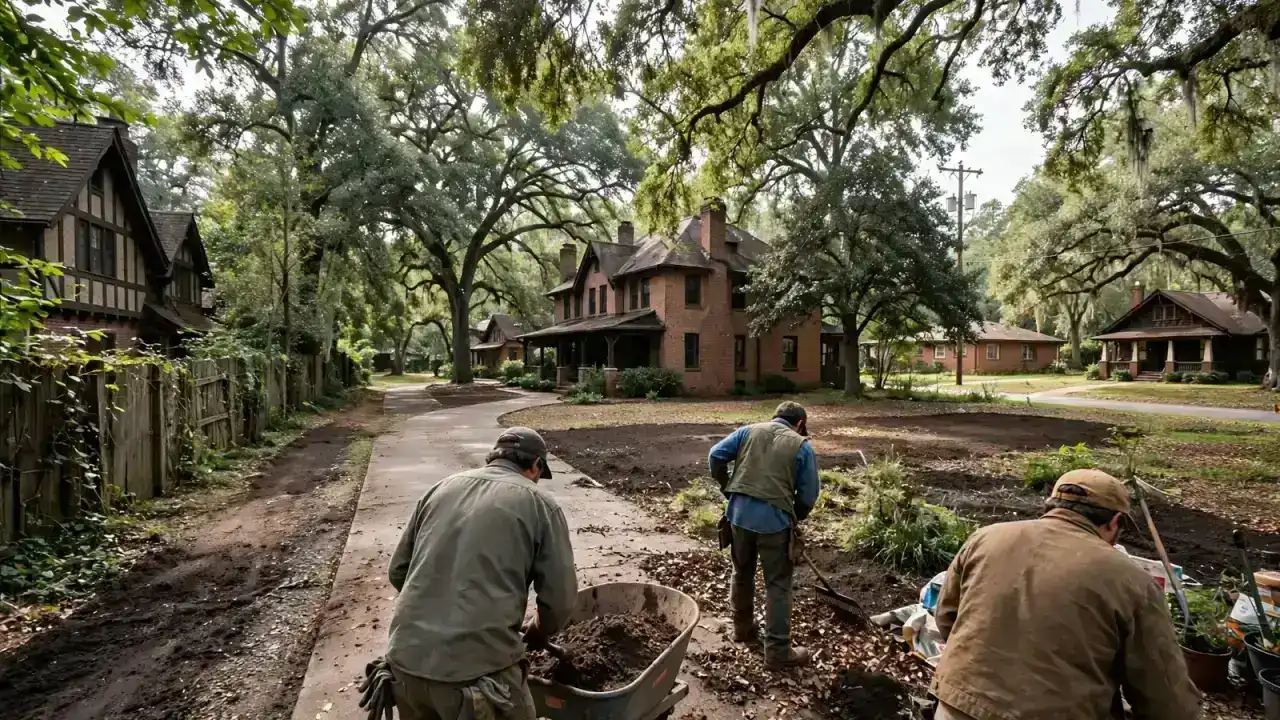
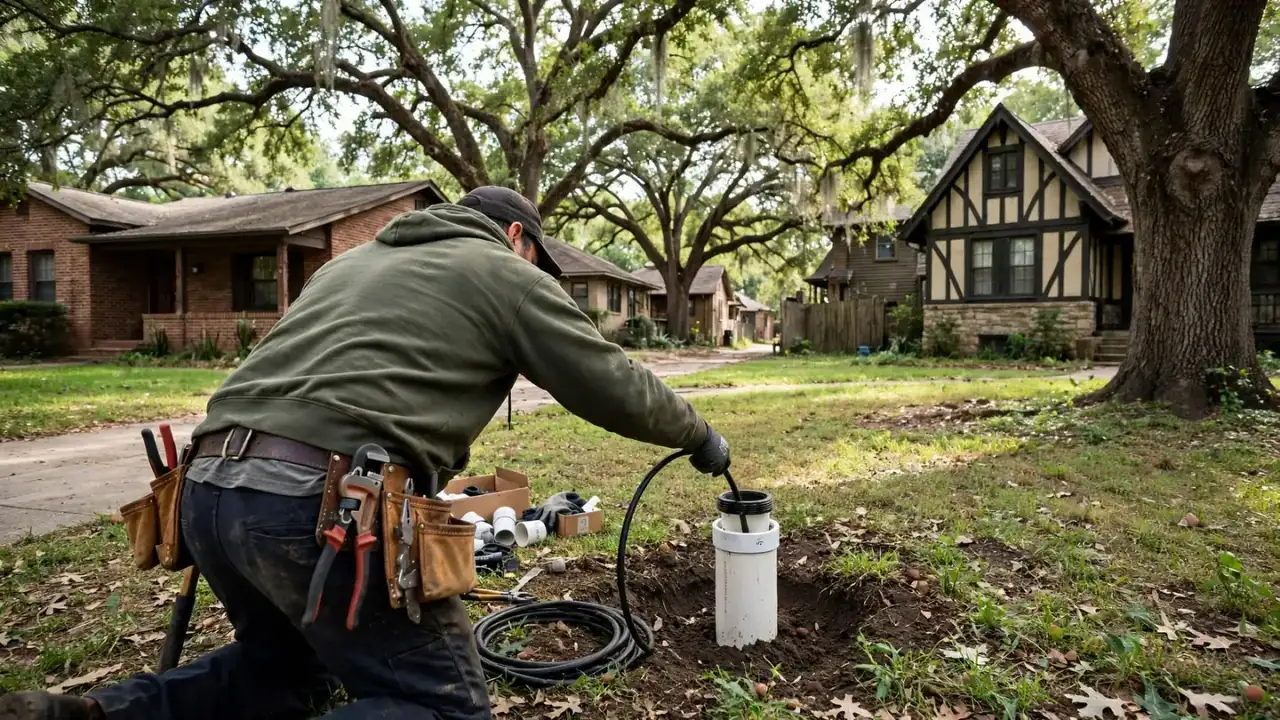
Lakewood grew in the decades between the world wars as Dallas expanded east. Builders put up Tudor Revival cottages with steep gables, Craftsman bungalows with deep porches, Spanish Eclectic houses with stucco and tile, and later Colonial and Minimal Traditional homes. Many sit on pier-and-beam foundations with crawlspaces; others were built on early slabs. Lots are generous by city standards, with mature trees planted generations ago.
The plumbing of that era used vitrified clay for the building sewer and cast iron for drains inside and under the house. [2] Many Lakewood houses still have that original pipe, now close to a century old, while others have had sections replaced over the years with a mix of materials.
Lakewood is also a neighborhood of renovations. Kitchens and bathrooms have been added or moved, second stories built and foundations leveled. Each project can affect the drains, and some left behind connections that do not match.
Lakewood sewer problems
What plumbers see most in Lakewood
These problems come up again and again on Lakewood houses.
Roots in clay laterals
Mature oaks, pecans and elms send roots into joints of old clay pipe.
Read moreCrawlspace drain leaks
Cast iron drains under pier-and-beam floors corrode and leak out of sight.
Read moreMixed old and new pipe
Past partial repairs leave clay, cast iron and PVC joined in one line.
Read moreShifting from clay soil
Expansive soil opens joints and creates sags along long laterals.
Read more
Trees and Lakewood sewers
Big trees and Lakewood sewer lines
Lakewood's canopy is a big part of its character. Many lots have live oaks, pecans, cedar elms and hackberries that are now enormous. Their roots spread far beyond the drip line and find the moisture escaping from century-old clay joints. On camera, many Lakewood laterals show root masses at regular intervals, one at nearly every joint.
Cleaning roots restores flow, but they return. For lines with roots throughout, lining is often the best permanent fix because it seals every joint at once without trenching through the root zone. Where the pipe has collapsed or sagged, pipe bursting or careful excavation may be needed. Protecting the trees is usually a priority for Lakewood owners, and trenchless methods help.
Lakewood figure
Pier-and-beam and crawlspaces
Pier-and-beam houses and crawlspace drains
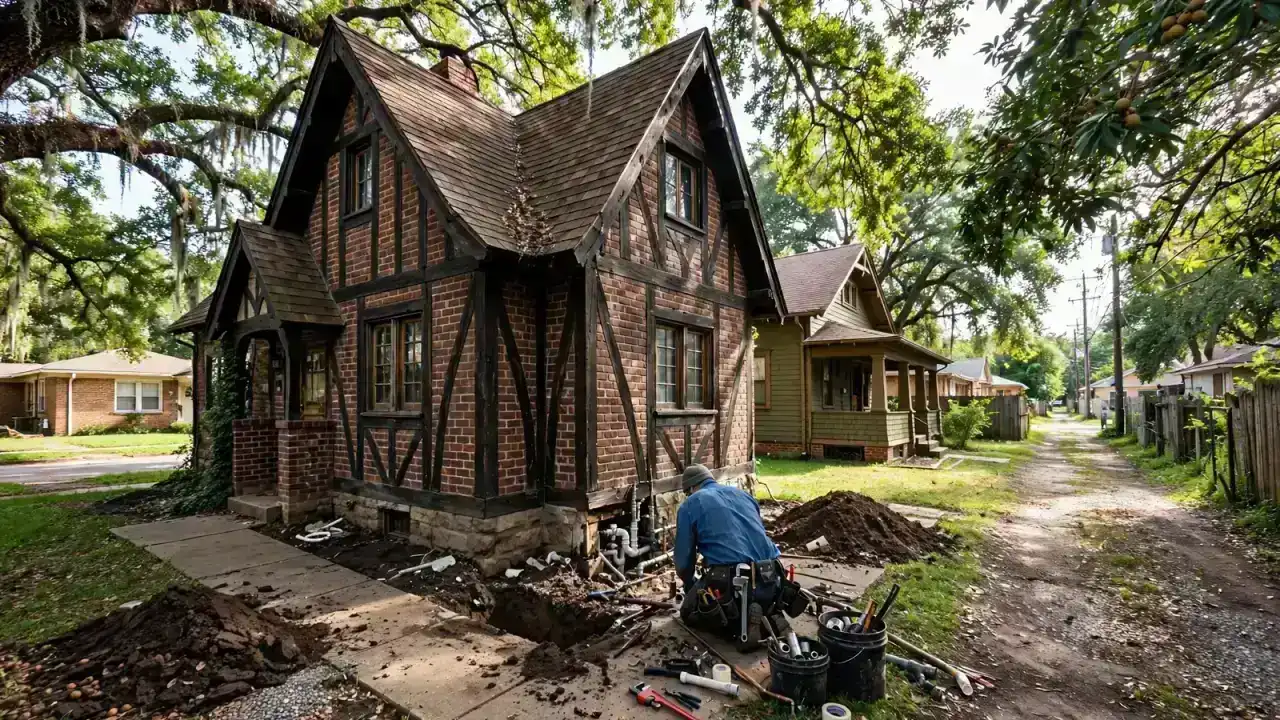
Many older Lakewood houses sit on pier-and-beam foundations, with drains running through a crawlspace. Cast iron there corrodes and can crack, and leaks may drip into the crawlspace for months before anyone notices. Signs include a sewer odor near foundation vents, damp or soft floors, or pests drawn to moisture. A plumber can inspect the crawlspace and test the drains. Repairs under a pier-and-beam house are usually easier than under a slab because the pipes are accessible from below.
Alley and street sewers in Lakewood
Where Lakewood laterals connect
Parts of Lakewood are served by sewer mains in alleys behind the houses; other blocks connect to mains under the street. Which you have determines where the lateral runs, where any digging would happen and how access is planned. Alley laterals often pass under detached garages, fences and back patios. A camera and locator show the route before any work begins.
Clay soil in Lakewood
Expansive soil and Lakewood sewer lines
Like most of Dallas, Lakewood sits on clay that swells when wet and shrinks when dry. Long, dry summers followed by heavy rains move the ground around buried pipe. Over decades, that movement separates joints and creates sags. It also affects foundations, which is why so many Lakewood houses have had foundation work, and why plumbing should be checked before and after leveling.
Renovations and sewer lines
Renovations and the sewer in Lakewood
When a Lakewood house gains a new bathroom, a larger kitchen or a second story, the original sewer may not be ready. Old clay laterals with roots and sags can struggle with added flow. Before a major renovation, a camera inspection of the main line is a sensible step. It is often easier to replace or line the lateral during a remodel than after.
Older paint, newer pipes
Mixed pipe materials in Lakewood lines
Over the years, many Lakewood laterals have been repaired piece by piece. A camera may show clay near the street, a section of cast iron, then PVC near the house, with transitions between them. Each transition is a potential weak point. When planning repairs, plumbers look at the whole line, not just the newest failure, to avoid a cycle of patches.
Lakewood permits
Permits and boundaries for Lakewood sewer work
Lakewood is inside the City of Dallas, so sewer repair and replacement generally need a city plumbing permit and inspection, pulled by a licensed plumber. Digging requires an 811 call. Lakewood has neighborhood conservation districts in parts of the area that govern certain exterior changes; underground sewer work usually is not affected, but restoring visible features such as front walks should respect any applicable rules.
Planning a Lakewood visit
Planning a sewer visit in Lakewood
- 1
Find the cleanout
Look near the foundation or toward the alley or street.
- 2
Note the trees
Point out large trees near the likely sewer path.
- 3
Crawlspace access
For pier-and-beam homes, note where the crawlspace entry is.
- 4
Past work
Share any history of repairs, foundation work or remodels.
- 5
Parking and alley
Mention alley access and any gates or locks.
Lakewood house types
Lakewood house types and sewer notes
| House type | Era | Sewer notes |
|---|---|---|
| Tudor cottage | 1920s-1930s | Clay lateral, often to the alley; roots common |
| Craftsman bungalow | 1920s | Pier-and-beam; crawlspace cast iron |
| Spanish Eclectic | 1920s-1930s | Clay lateral; varied connections |
| Colonial and Minimal Traditional | 1940s | Clay or cast iron; early slab in places |
| Renovated or rebuilt home | Recent | New interior pipe, sometimes old lateral |
Lakewood repair choices
Choosing repairs for a Lakewood lateral
For roots at many joints in round clay pipe, lining is often the best balance of durability and disruption. For collapsed or sagging sections, excavation or pipe bursting is needed. For crawlspace drains, replacing cast iron with PVC is common and accessible. A camera inspection ties all of it together.
Lakewood and White Rock Lake
Living near White Rock Lake
Streets near White Rock Lake sit on varied terrain, with some lots sloping toward the lake and its creeks. Slope affects lateral depth and grade. Heavy rains can raise groundwater near the lake, which may seep into cracked laterals and add flow. If backups happen after storms, a camera inspection can show whether infiltration is part of the problem.
Lakewood sections up close
Sewer notes for Lakewood's sections
- Lakewood HeightsRolling streets of 1920s and 1930s homes with large lots and mature trees. Long laterals and root intrusion are the most common findings.
- Around the Lakewood shopping areaOlder cottages and duplexes close to Abrams and Gaston, with alley sewers and a mix of original and replaced pipe.
- Near White Rock LakeLarger homes on sloping lots toward the lake and its creeks, with deeper laterals and possible groundwater after storms.
- Gastonwood and nearby streetsTudors and Spanish Eclectic homes on curving streets, many renovated, often with old laterals left in place.
- Hollywood and Santa Monica areaPrewar cottages and bungalows on smaller lots with alley connections and back-yard trees.
Before and after foundation work in Lakewood
Lakewood foundation leveling and the sewer
Foundation repair is common in Lakewood because older pier-and-beam and early slab houses move with the clay. Leveling a house shifts its drains relative to the ground, and joints that were already weak can separate. Many Lakewood owners have the drains tested before leveling so any existing leaks are known, then tested again afterward. If a test after leveling shows a leak, the camera can usually find it, and repairs can be planned before the floors are finished.
Lakewood duplexes and garage apartments
Duplexes and garage apartments in Lakewood
Some Lakewood lots include a garage apartment or a duplex sharing one lateral. Extra kitchens and bathrooms send more flow through old clay pipe. Grease from a second kitchen and wipes from a second household add to the load. Owners of these properties often schedule cleaning and camera checks so tenants do not experience backups. If the lateral is replaced, sizing it for all the connected fixtures is worth discussing.
Lakewood buyers and sellers
Sewer checks when buying or selling in Lakewood
Because so many Lakewood homes are near a century old, buyers often order a sewer camera inspection during the option period. Findings such as roots in clay joints, a belly under the back yard or a corroded cast iron drain in the crawlspace are common. Sellers who know their line's condition, and have the video, can avoid surprises in negotiations. Buyers can plan repairs before move-in rather than discovering problems with the first backup.
Lakewood winter and storms
Storms, freezes and Lakewood sewers
Heavy spring storms in Dallas can raise groundwater and send it into cracked laterals, adding flow just when roots and sags restrict it. Occasional hard freezes rarely affect buried sewer pipe directly, but they can damage exposed cleanouts and crawlspace drains on pier-and-beam houses. After a hard freeze, check exposed pipes and cleanout caps for cracks.
Lakewood landscaping and sewer paths
Landscaping, beds and patios over Lakewood laterals
Lakewood yards are often carefully landscaped, with beds, stone paths and patios built over the years. Many sit directly on top of laterals. Trenchless methods protect these features by limiting digging to small pits, which can often be placed in turf or under a removable section of path. When excavation is unavoidable, crews can stockpile and replace pavers and plants with care.
Choosing a Lakewood plumber
Questions to ask a plumber about a Lakewood lateral
Ask whether they will run a camera and provide the video, how they will protect large trees, which method they recommend for roots at many joints, how they handle pier-and-beam drains and whether they will add an accessible cleanout. Ask who pulls the Dallas permit. Check their license with the Texas State Board of Plumbing Examiners.
A Lakewood camera inspection
What a camera inspection usually looks like on a Lakewood lot
On a typical Lakewood lot, the plumber starts at a cleanout near the back or side of the house, or pulls a toilet if no cleanout exists. The camera travels through cast iron at the foundation, then into clay. Root masses often appear every few feet, with heavier growth near big trees. Partway along, there may be a repair section of PVC or cast iron from decades past. The camera continues toward the alley or street until it reaches the city's lateral. The locator marks the path, which frequently passes near a large oak or under a patio added long after the house was built.
Cleanouts on Lakewood houses
Adding cleanouts to older Lakewood homes
Many original Lakewood houses were built without an outdoor cleanout. Every service call then means pulling a toilet or climbing onto the roof to reach a vent. Adding a two-way cleanout near the foundation is one of the most practical upgrades, often done during the first repair. It makes cleaning faster and cleaner and lets future camera inspections run in both directions.
Lakewood habits that help
Everyday habits that protect older Lakewood lines
Older clay lines with roots and rough joints catch whatever goes down the drain. Keeping wipes, paper towels and grease out of the system makes a real difference. Running the washer and dishwasher at different times spreads out heavy flows. Watching for early signs, such as a gurgle or a slow tub, gives time to schedule service before a backup.
Lakewood repair sequence
A typical repair sequence for a Lakewood lateral
For a Lakewood line with roots throughout and one sag, a common sequence is: clear the roots, film the line, excavate and re-lay the sagging section with new pipe at proper slope, then line the remaining clay from a cleanout near the house to the city connection. The work is permitted and inspected, the pits are restored and a final camera pass confirms the result. Splitting the work this way fixes every defect while limiting digging near trees.
Lakewood and the city main
When the problem is in the city main
Occasionally the camera reaches the city's lateral or main and finds the blockage there, or several houses on the same alley back up together. Problems on the public side are reported to Dallas through 311. Having the plumber's video, with the distance to the blockage, makes the report clearer.
Lakewood slab homes
Early slab houses in Lakewood
Lakewood's later homes from the 1940s and early 1950s were sometimes built on early slabs with cast iron drains embedded below. Those drains are harder to reach than crawlspace pipes. Leaks under the slab may show up as damp flooring, cracked tile or odors. A plumbing test and camera inspection locate the problem, and repairs may involve tunneling from outside, a targeted slab cut or rerouting drains.
Lakewood gutters and drainage
Yard drainage and sewer lines in Lakewood
Some older Lakewood homes once had gutters or area drains tied into the sewer, which is not allowed today. During storms, those connections send rainwater into the lateral and can cause backups. A camera inspection can reveal unexpected connections. Disconnecting them and directing rainwater to the yard or storm system protects the sewer.
Lakewood after a repair
Keeping a repaired Lakewood line healthy
Once a Lakewood lateral is lined or replaced, keep the final video and a sketch of the cleanout locations with your house records. Avoid grease and wipes, and consider a quick camera check a year or two later, especially if large trees stand near the line. If you plant new trees, keep them away from the sewer path you now know precisely.
Spanish and Tudor homes
Architectural details and access in Lakewood
Lakewood's Tudor and Spanish Eclectic homes often have stone or brick steps, walled courtyards and tile walkways that owners want to protect. Pits and trenches are planned to avoid these features where possible, and any removed pavers or stones are set aside for reinstallation.
Lakewood timing
When to schedule sewer work in Lakewood
Spring and fall offer mild weather for excavation and restoration. Late spring is a good time to clean root-prone lines before summer. Summer work is common but clay is hard to dig in drought. After heavy rains, the clay is sticky and pits may need pumping. Plan around these conditions for the smoothest job.
Lakewood and Orangeburg
Orangeburg pipe in some Lakewood repairs
Most original Lakewood laterals are clay, but some sections replaced in the 1950s and 1960s used Orangeburg fiber pipe. On camera it looks oval, blistered or flattened. Orangeburg cannot be lined reliably and is usually replaced by bursting or excavation.
Lakewood pets and yards
Pets and open pits in Lakewood yards
Lakewood yards often have dogs. Open pits and trenches are hazards, so keep pets inside or away from the work area until everything is backfilled, compacted and safe to walk on.
Lakewood sewer questions
Questions about sewer lines in Lakewood
Are Lakewood sewer lines usually clay?
Many original Lakewood laterals are vitrified clay, often with sections replaced over time. A camera inspection confirms the material.
Do I need to cut down my tree to fix roots in the sewer?
Usually not. Lining or replacing the pipe seals it against roots while keeping the tree.
Can a plumber fix drains under my pier-and-beam house?
Yes. Crawlspace drains are reachable from below, which makes replacement simpler than under a slab.
Does my sewer run to the alley or the street?
It depends on the block. A camera and locator show the route.
Do I need a permit for sewer work in Lakewood?
Generally yes. Repairs and replacements need a City of Dallas plumbing permit and inspection.
Should I check my sewer before a remodel?
Yes. A camera inspection before adding bathrooms or a second story shows whether the old lateral can handle it.
Is Orangeburg pipe found in Lakewood?
Occasionally, in sections replaced mid-century. It deforms with age and is usually replaced rather than lined.
Should I check the line before leveling my foundation?
Yes. Testing before and after leveling shows whether the work affected the drains.
Can rainwater get into my Lakewood sewer line?
Yes, through cracks or old gutter connections. A camera inspection can find both, and fixing them reduces storm-time backups.
How old are most Lakewood sewer lines?
Many date from the 1920s to 1940s, though sections have often been replaced. A camera inspection shows what remains.
Is lining a good fit for Lakewood clay laterals?
Often, when the pipe is still round. It seals every joint without trenching through tree roots. Sags and collapsed sections need excavation first.
Why do drains under my pier-and-beam house smell?
Corroded cast iron in the crawlspace may be leaking. A plumber can inspect the crawlspace and test the drains.
What should I tell the plumber about my Lakewood house?
Its age, foundation type, where trees stand, whether the sewer runs to the alley and any past repairs.