
Key facts: Signs of a broken sewer line
- Blockages or breaks in the main sewer line usually affect several fixtures at once rather than a single drain [1].
- Vitrified clay and cast iron, both common in older Dallas laterals, are prone to cracking and joint failure with age [2].
- Houston Black clay, widespread under Dallas, shrinks and swells strongly with changes in moisture, stressing buried pipe [3].
Broken sewer line: the short answer
The short answer on broken sewer line signs
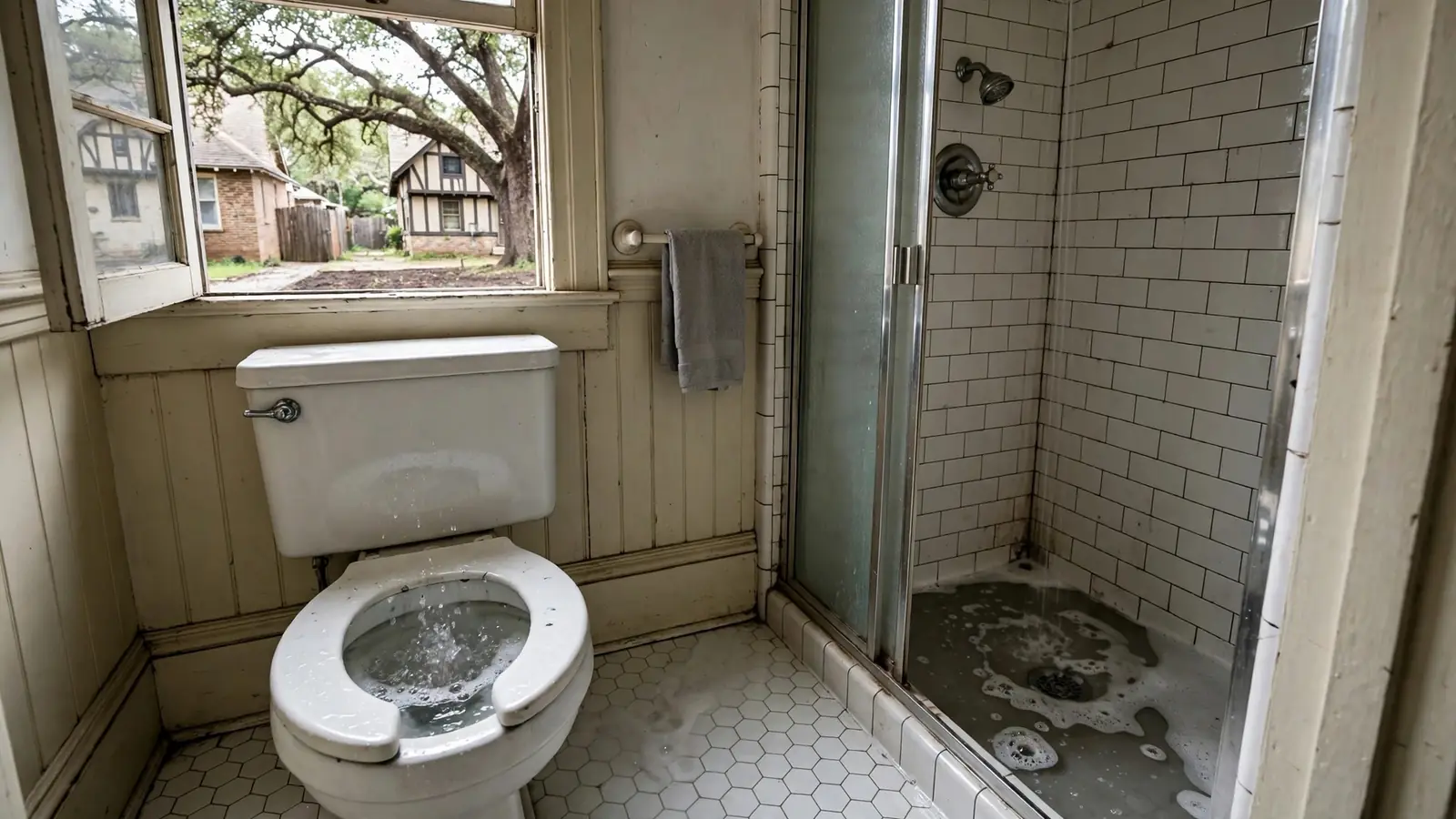
The clearest signs are problems that affect several fixtures at once: gurgling toilets, slow drains everywhere, water rising in the tub when you flush, and repeated clogs that come back after clearing. Outside, sewage smells, soggy or sunken spots and unusually green stripes of grass over the line point to a leak. A camera inspection confirms what is wrong.
Signs and causes
Broken sewer line signs at a glance
| Sign | Likely cause | What to do |
|---|---|---|
| Several slow drains | Restriction in the main line | Camera inspection |
| Toilet gurgles when the washer drains | Air pushed back by a blockage | Stop heavy use; call a plumber |
| Tub fills when toilet flushes | Main line blocked downstream | Stop water use; call |
| Clogs return within weeks | Roots, belly or break | Camera inspection |
| Sewage smell in the yard | Leak in the lateral | Call; avoid the area |
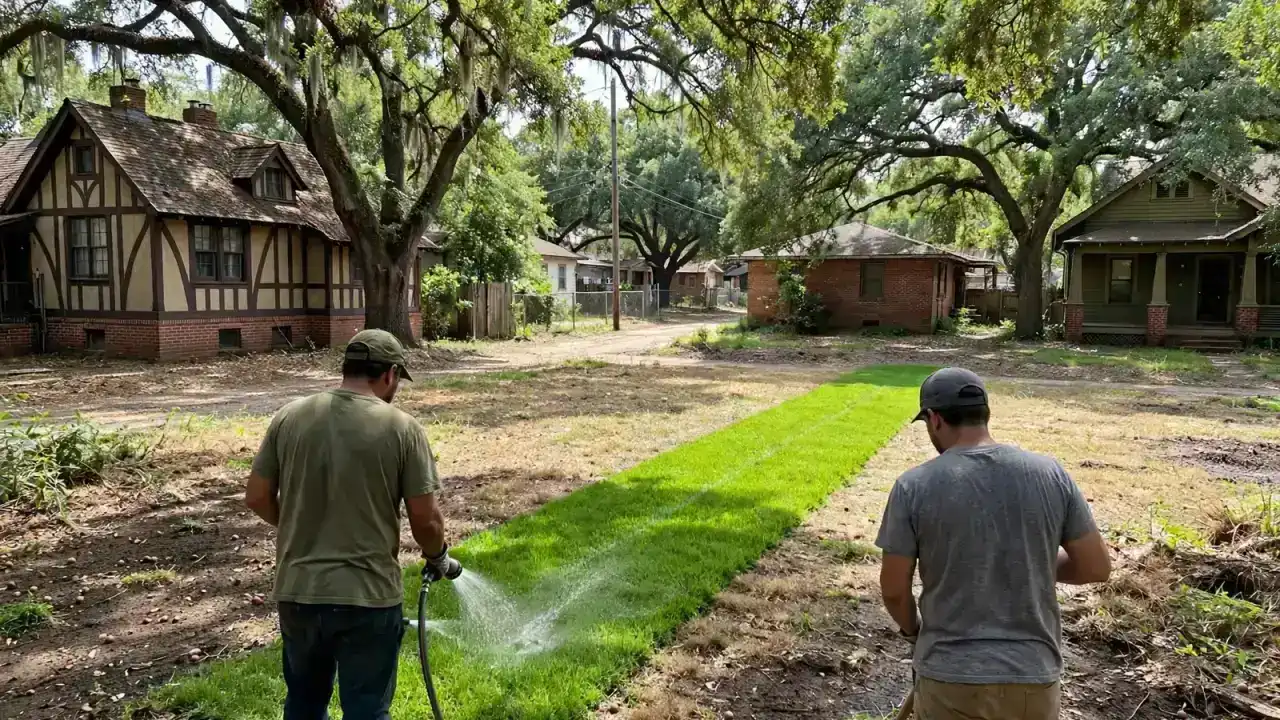
| Lush green stripe in the lawn | Leaking sewage fertilizing grass | Camera and locate |
| Soggy or sunken spot | Leak washing out soil | Call promptly |
Lush stripe figure
Checks you can do safely
Checks you can make before calling
- Run water in one sink and watch whether other drains gurgle or rise.
- Note which fixture backs up first; it is usually the lowest one.
- Look for a cleanout outside and see whether water stands in it (open only if it is not under pressure).
- Walk the yard along the likely sewer path looking for wet spots, smells or lush grass.
- Note how long the problem has been building and whether it follows heavy rain or laundry.
Inside the house
Signs inside a Dallas house
Inside, the main clue is that problems are not isolated. A single slow sink is usually a local clog. When the shower, toilets and kitchen sink all slow together, or one fixture reacts when another drains, the shared building sewer is involved. Gurgling is air being pushed through water in the traps by a restriction downstream. Sewage odors indoors can mean a trap has dried out, but combined with slow drains they suggest a main line problem.
Outside the house
Signs in a Dallas yard
Outside, a broken lateral leaks into the soil. In Dallas clay, that can create a soft or soggy patch that stays wet when the rest of the yard is dry, a sunken spot where soil has washed into the pipe, or a stripe of greener grass along the line's path. On alley-sewer lots, signs may appear in the back yard or along the fence line. Smells are strongest in warm weather.
Foundation clues
When sewer problems show up as foundation clues
In Dallas, a leaking sewer near or under a house can saturate the clay and contribute to foundation movement. New cracks in interior drywall or brick, sticking doors or uneven floors are not proof of a sewer leak, but if they appear alongside drain problems, mention both when you call. A plumbing test can rule a leak in or out.
How a plumber diagnoses it
How a plumber confirms a broken sewer line
- 1
Listen to symptoms
Which fixtures, how often, and since when.
- 2
Check the cleanout
Standing water shows which side the blockage is on.
- 3
Clear if needed
Restore flow so the camera can see.
- 4
Camera inspection
Video shows roots, cracks, offsets, bellies or collapse.
- 5
Locate
The defect is marked on the ground with depth.
Repair or replace a broken line
Repair or replace after a break is found
One defect in an otherwise sound pipe is usually a spot repair. Cracks and roots along a round pipe can often be lined. Bellies, collapsed sections, Orangeburg and badly corroded cast iron usually mean replacement. The camera video guides the decision.
Signs by house age
How the signs differ by the age of a Dallas house
In 1920s to 1940s houses in Lakewood, the M Streets and Oak Cliff, clay laterals with roots are the usual story: drains slow gradually, backups come in late summer and clear after cabling, then return. In 1950s to 1970s slab homes in Lake Highlands and Casa View, corroded cast iron under the slab often shows up as odors, damp flooring or a backup in a hall bathroom. Newer homes with PVC laterals more often see grease or wipe clogs, or damage from settling and foundation work.
Signs after heavy rain
Why some signs appear after Dallas storms
Heavy rain can make a failing line obvious. Groundwater seeps into cracked pipe and adds flow, so restricted lines back up during or after storms. Rain also swells the clay around pipes, pushing on weak sections. If drains slow or gurgle after every big rain, a cracked lateral is a likely cause.
Ignoring the signs
What happens if the signs are ignored
A restricted or broken lateral rarely fixes itself. Roots grow, cracks widen and bellies collect more solids until a full backup occurs, often at an inconvenient time.
Prevention
Preventing sewer line breaks
- Keep wipes, grease and paper towels out of drains.
- Schedule camera checks on older clay or cast iron lines.
- Keep new trees away from the sewer path.
- Fix small leaks before they wash out soil.
What to tell the plumber
What to tell the plumber about the signs
- Which fixtures are affected and in what order.
- When the problem started and whether it is getting worse.
- Any smells, wet spots or green stripes in the yard.
- The age of the house and any past sewer work.
- Whether your sewer runs to the alley or the street, if you know.
Broken line questions
Questions about broken sewer line signs
Can a sewer line be broken without a backup?
Yes. A cracked line can leak into the soil for a long time before it blocks. Smells, wet spots and lush grass may be the only signs.
Why does my toilet gurgle when I run the washer?
A large flow from the washer pushes air back through a restricted main line, bubbling through the toilet trap.
Are sewer problems worse in Dallas summers?
Drought shrinks the clay and roots search for water, so cracks open and roots invade more in hot, dry periods.
Is a single slow drain a sign of a broken sewer line?
Usually not. One slow drain is typically a local clog. Several slow drains together point to the main line.
Can foundation repair break a sewer line?
Leveling can shift or crack drain lines near and under the house. A plumbing test before and after foundation work catches problems early.
Do newer homes get broken sewer lines?
Less often, but PVC can still crack from settling, root pressure at connections or damage during other work.
How fast should I act on these signs?
Promptly. Slow drains and gurgling often come before a backup, and catching the problem early limits damage.