
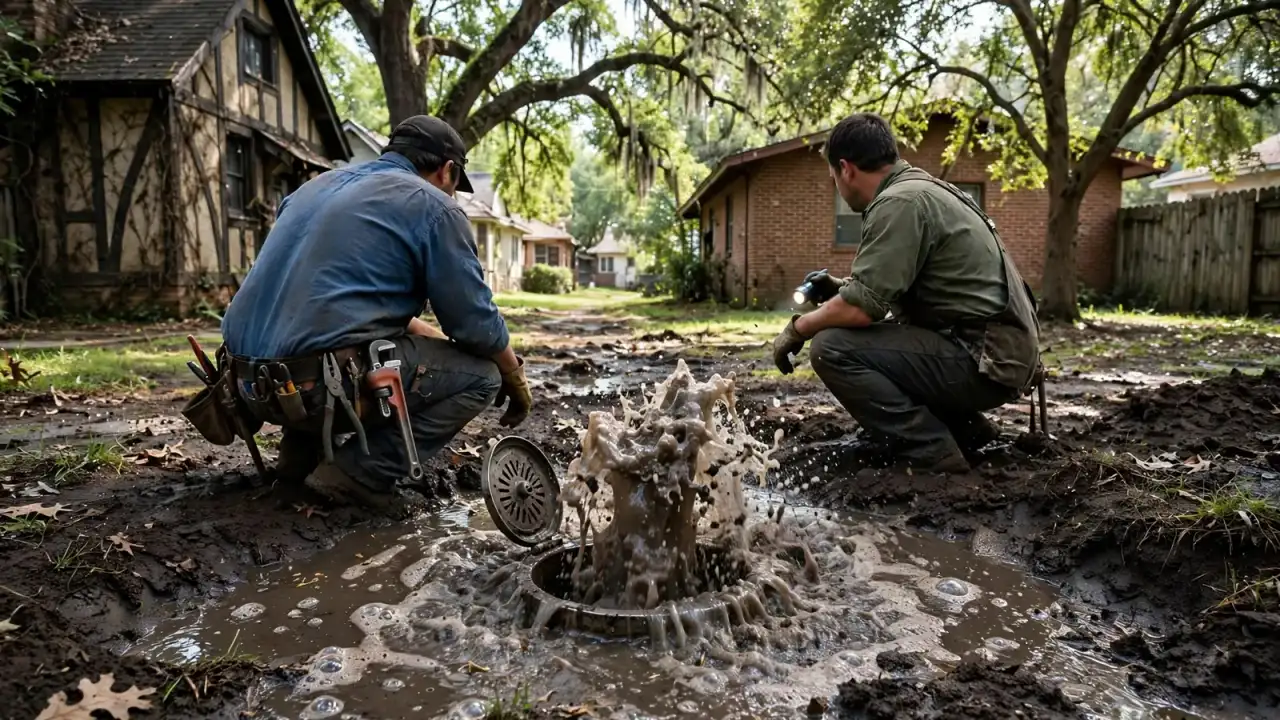
Key facts: Sewer backup in the house
Backup in the house: the short answer
What to do first when sewage backs up
Stop using water right away, keep people and pets away from the sewage, and call a plumber to clear the main line. Do not pour chemical drain cleaners into a backed-up line. Once flow is restored, a camera inspection shows why it happened so it can be fixed.
Backup clues
Backup clues and what they mean
| What you see | Likely cause | Next step |
|---|---|---|
| Water rises in tub when toilet flushes | Main line blocked | Stop water use; call |
| Floor drain or shower overflowing | Main line blocked | Call; avoid contact |
| Only one toilet clogged | Local clog | Plunger or auger |
| Neighbors backing up too | City main blocked | Report to the city |
| Backups after heavy rain | Overloaded or cracked line | Camera inspection |
Cleanout figure
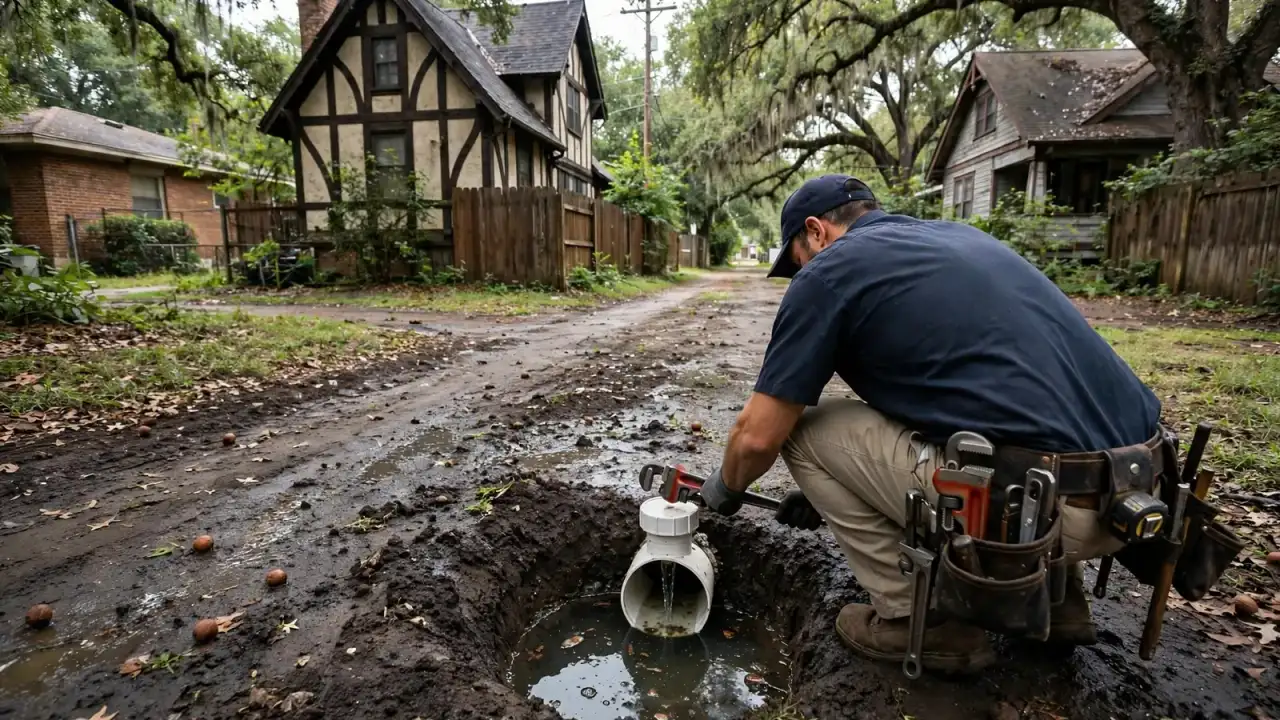
Safe first steps
Safe first steps during a backup
- Stop all water use: no flushing, showers, dishwasher or laundry.
- Keep children and pets out of the affected room.
- Wear gloves and boots if you must enter the area.
- Open windows for fresh air.
- Photograph the damage for insurance.
- Do not open a cleanout that may be under pressure.
Why backups happen in Dallas
Why Dallas homes back up
Roots in older clay and cast iron laterals, sagging sections that collect solids, broken pipe, grease and wipes are the usual causes. Sometimes the city main is blocked, which can affect several homes on a street or alley at once.
Slab and pier-and-beam homes
Backups in slab and pier-and-beam houses
In slab homes, sewage appears in the lowest fixtures. In pier-and-beam houses, a broken drain can leak into the crawlspace unseen, showing up as odors or damp floors. Both need prompt attention.
Cleanup basics
Cleaning up after a backup
Hard surfaces can be cleaned and disinfected. Carpet, pad and drywall soaked by sewage are usually removed. Dry the area thoroughly to prevent mold. Larger backups are best handled by restoration professionals.
How a plumber handles a backup
How a plumber handles a house backup
- 1
Find access
Locate the cleanout or another access point.
- 2
Clear the line
Use a cable machine or water jet to restore flow.
- 3
Inspect
Run a camera to find the cause.
- 4
Advise
Explain the repair and whether the problem is on the city side.
Repair after a backup
Repair options after a backup
If the cause was grease or wipes, cleaning and habit changes may be enough. Roots usually call for lining or spot repair. Bellies and breaks need excavation or replacement. Blockages in the city main are reported to the city.
What not to do during a backup
Mistakes to avoid when sewage backs up
Avoid running the dishwasher or washing machine to see whether drains work; it only adds water with nowhere to go. Do not pour chemical drain openers into a backed-up line; they rarely clear a main blockage and can burn anyone who later works on the pipe. Do not try to clear the main with a household plunger or a small hand auger. Do not walk through sewage without boots, and keep vacuum cleaners away from it.
When the city is responsible
Telling a private blockage from a city problem
If water stands in your outdoor cleanout and neighbors on the same alley or street are also backing up, the city main may be blocked. Report it through Dallas 311. If only your house is affected and the cleanout is dry, the blockage is likely inside your line or between the house and the cleanout. A plumber's camera confirms which.
After the backup is cleared
What happens after the line is flowing again
Once a plumber clears the line, ask for a camera inspection while they are there. The video shows whether roots, grease, a belly or a break caused the backup. That evidence matters for repair planning and for any insurance claim. Then begin cleanup, starting with the most contaminated areas, and dry everything thoroughly.
Backups in duplexes
When a backup affects more than one unit
In Dallas duplexes and small multi-unit buildings, one lateral often serves several households. A backup in one unit may be caused by use in another. Coordinate with neighbors or tenants to stop water use, and have the shared line cleared and inspected. Shared lines often need more frequent maintenance.
Backups and old toilets
Toilets, floor drains and the lowest fixture
In a slab house, the lowest drain is often a shower or tub. In some older homes, a laundry floor drain or a downstairs toilet sits lowest. Knowing which fixture overflows first helps you watch for early signs and tells the plumber where the restriction is relative to the house drains.
Backups and new construction
Backups in newer Dallas homes
Newer homes with PVC laterals still back up, usually from grease, wipes or construction debris left in the line, or from settling that created a belly. A camera inspection quickly shows which.
Backups during holidays
Why backups often happen when guests visit
Extra people mean more showers, more flushes and more laundry, and holiday cooking sends more grease down kitchen drains. A line that copes with normal use can fail under that load. If your line has a history of slow drains, have it checked before hosting.
Preventing backups
Preventing the next backup
- Keep grease and wipes out of drains.
- Schedule camera checks for older lines.
- Fix roots and breaks before they block.
- Ask about a backwater valve if city backups are a risk.
What to tell the plumber about a backup
What to tell the plumber during a backup
- Which fixtures overflowed.
- Whether water is still rising.
- Whether neighbors have problems too.
- Where your cleanout is, if you know.
House backup questions
Questions about sewer backups in Dallas homes
Where does sewage usually come up in a Dallas house?
In the lowest fixture, often a ground-floor shower or tub, because most Dallas homes have no basement.
Should I call the city or a plumber?
If neighbors are also backing up, report it to the city through 311. Otherwise call a plumber to clear your line.
Can I use a plunger on a backed-up main line?
Plunging rarely clears a main line blockage. Stop using water and call a plumber.
Is sewer backup covered by insurance?
Often only with a specific sewer backup endorsement. Check your policy.
Does a backup mean my sewer line is broken?
Not always. Grease, wipes or roots can block a sound line. A camera inspection after clearing tells you whether the pipe itself is damaged.
Should I run water to test the drains after clearing?
Let the plumber test first. After they confirm flow and inspect the line, normal use can resume.
Can a backup happen again soon after clearing?
Yes, if the cause was roots, a belly or a break. Fixing the cause is what prevents repeats.
How can I tell if the problem is mine or the city's?
A plumber's camera inspection shows where the blockage is relative to the city connection.