
Key facts: Sewer smell in the yard
Yard smell: the short answer
Sewer smell outside: the short answer
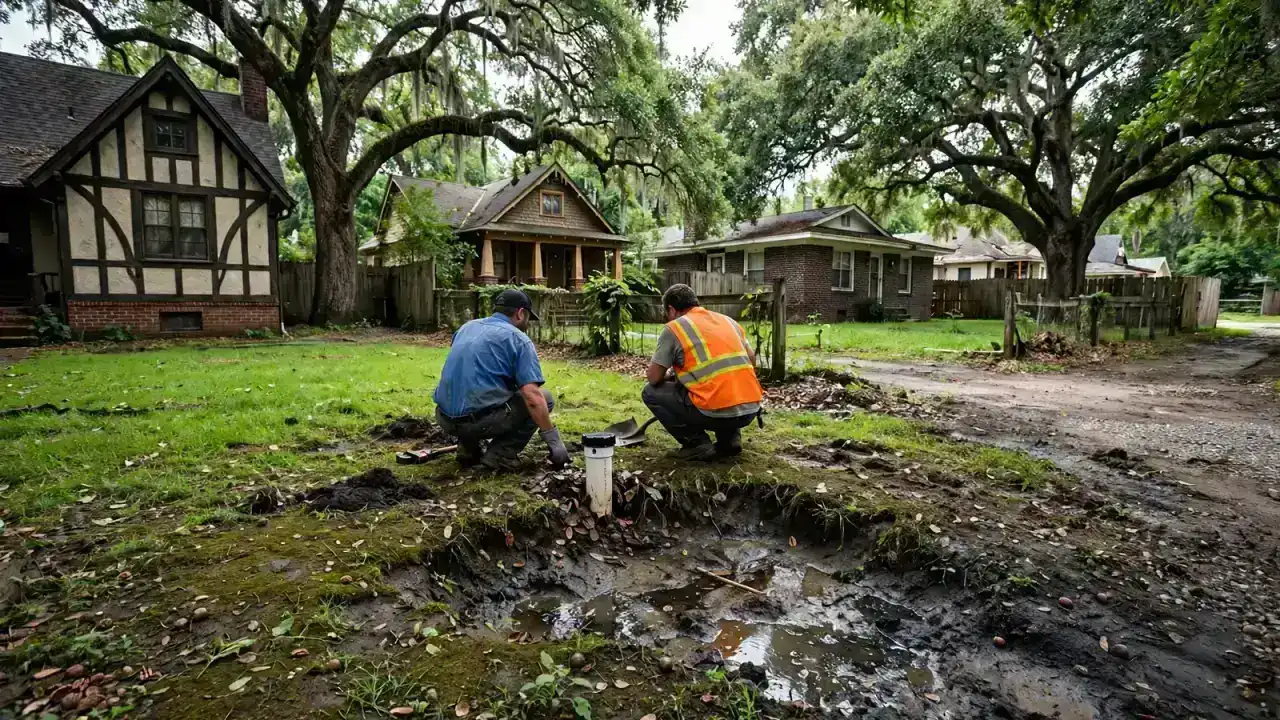
A persistent sewage smell in the yard usually comes from a leaking or broken lateral, a cleanout with a missing or cracked cap, or a vent issue. A soggy spot or lush grass near the smell points to a leak. A camera inspection finds it.
Smell sources
Common yard smell sources
| Clue | Likely source | What to do |
|---|---|---|
| Smell near a cleanout | Missing or cracked cap | Replace the cap |
| Wet or sunken patch | Leaking lateral | Camera and locate |
| Smell near roofline | Vent releasing gas | Usually normal; check vent height |
| Smell along the alley | City line or neighbor | Report to the city |
| Smell after rain | Leak or surcharged line | Inspect |
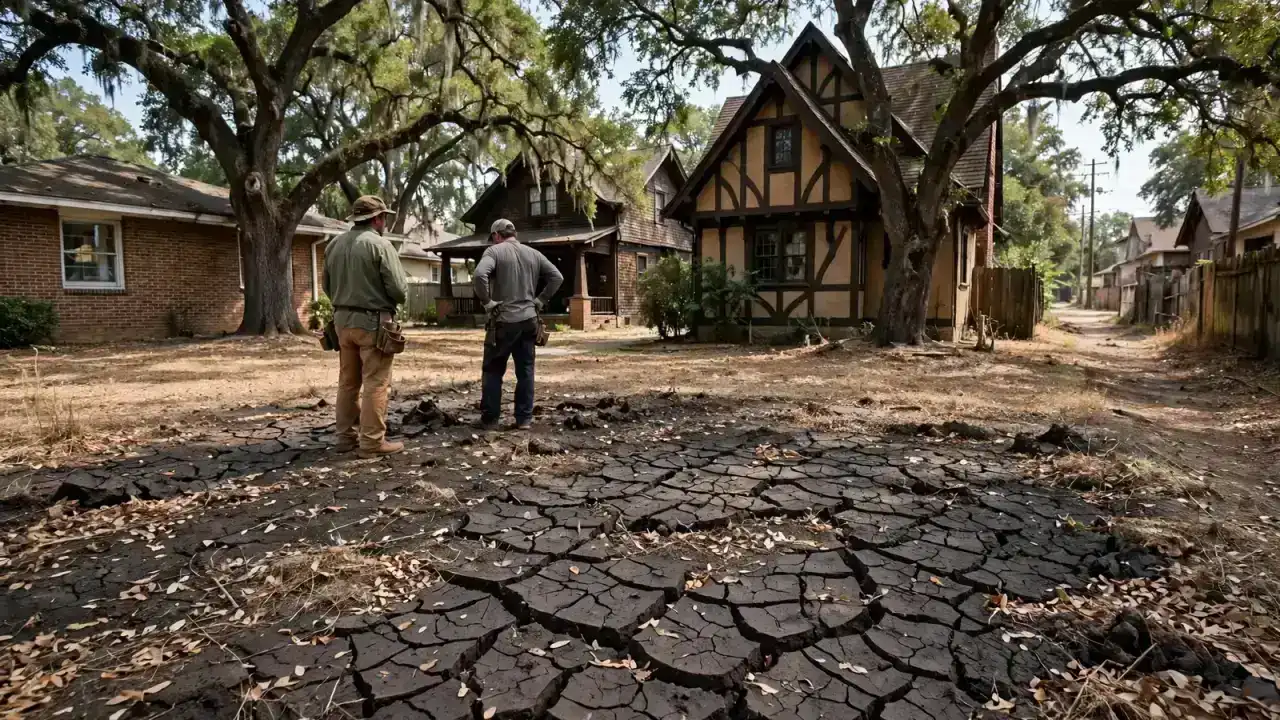
Dry clay figure
Safe checks
Safe checks for a yard smell
- Check that cleanout caps are present and intact.
- Walk the sewer path for wet or sunken spots.
- Note whether the smell is stronger after rain or heavy water use.
- Avoid digging; call 811 before any excavation.
Leaking laterals
When a broken lateral causes the smell
A cracked or broken lateral leaks sewage into the soil. The smell is often strongest on warm days and near the leak. Wet or sunken soil and lush grass are common companions.
Cleanouts and vents
Cleanout caps and plumbing vents
A cleanout without a cap, or with a cracked one, lets sewer gas escape at ground level. Lawn mowers often break caps. Vents on the roof release gas by design; if wind carries it down into a patio, a taller vent may help.
Drought and the clay
How Dallas droughts affect yard smells
When Dallas clay dries and cracks, gaps open around buried pipe, and smells can travel through the cracks to the surface. After rain, swelling clay can close them but also push on pipes.
How a plumber finds the source
How a plumber traces a yard smell
- 1
Check caps and vents
The simplest causes first.
- 2
Camera inspection
Look for breaks along the lateral.
- 3
Locate
Mark the leak on the ground.
- 4
Smoke test
Sometimes used to reveal leaks and open pipes.
Repair or replace after a smell
Fixing the source of a yard smell
A missing cap is a quick fix. A leaking joint may be a spot repair or lining. A badly broken line may need replacement.
Smells near the alley
Sewer smells along Dallas alleys
Many older Dallas neighborhoods have sewer mains in the alleys. If the smell is strongest along the alley rather than in your yard, the source may be the public main, a manhole or a neighbor's line. Report persistent alley odors to the city through 311. If your lateral connects in the alley, a camera inspection can show whether your line is leaking near the connection.
Smells after foundation repair
Yard smells after foundation work
Foundation repair can shift sewer lines near the house. If a new smell appears after leveling, a joint may have separated. A plumbing test or camera inspection can confirm and locate it.
Smells and pets
Why dogs dig at sewer leaks
Dogs often dig or sniff persistently at spots over a sewer leak because the smell is strong to them. If your dog keeps returning to the same patch of lawn, check that area for wet soil and odors.
When the smell is inside
When a yard smell moves indoors
If the smell moves indoors, check that all drain traps have water, especially in rarely used bathrooms and floor drains. A dry trap lets sewer gas into the house. If traps are full and the smell persists, a vent or drain leak may be the cause.
Smells near the foundation
Sewer smells close to the house
A smell near the foundation can come from a crack where the building drain exits the slab or crawlspace, a leaking cleanout at the house or a dry trap inside. On pier-and-beam houses, a broken drain in the crawlspace often shows up first as an odor near the vents. A plumber can inspect the crawlspace and test the drains.
Smells in hot weather
Why yard smells peak in Dallas summers
Heat speeds bacterial activity in sewage, and dry, cracked clay opens paths for gas to rise. That is why smells from a small leak can be barely noticeable in winter and strong in July and August. If the smell returns every summer, a leak is likely.
Smells and irrigation
Irrigation, wet soil and false alarms
A soggy spot is not always a sewer leak. Broken sprinkler lines, a leaking water service or poor drainage can create wet areas too. The difference is usually the smell: a sewer leak smells like sewage. If you are unsure, a plumber can check both the water service and the sewer.
Checking the cleanout safely
How to look at your cleanout safely
Find the capped pipe near the foundation or property line. If drains are working normally, you can unscrew the cap slowly and look inside with a flashlight. Water standing in the pipe means a blockage downstream. If water or sewage starts to rise, replace the cap and call a plumber. Never open a cleanout while the house is actively backing up.
Preventing smells
Preventing yard smells
- Keep cleanout caps intact and visible.
- Fix leaks promptly.
- Inspect older lines periodically.
What to tell the plumber about the smell
What to tell the plumber about a yard smell
- Where the smell is strongest.
- Any wet spots or lush grass.
- Whether neighbors notice it too.
Yard smell questions
Questions about sewer smells in the yard
Is a sewer smell in the yard dangerous?
Sewer gas in open air is usually more nuisance than danger, but strong concentrations should be avoided and the source fixed.
Why does the smell get worse after rain?
Rain can raise flow in the sewer and push gas out of openings, or reveal leaks.
Could the smell come from the city sewer?
Yes, especially along alleys. Report public-side problems to the city.
Can a lawn mower break my cleanout cap?
Often. Replacing a broken cap is simple and stops smells at ground level.
Will rain wash away a sewer smell?
It may mask it briefly, but rain often makes leaks worse by adding water to the soil and the line. Persistent smells need investigation.
Can a yard smell come from my neighbor's line?
Yes. Smells travel, and a neighbor's leak or an alley main can be the source. Note where the smell is strongest.
Does a sewer smell mean my line is broken?
Not always. A missing cap or vent issue can cause smells. A wet spot or lush grass makes a leak more likely.
Should I put a new cap on my cleanout myself?
Replacing a missing or broken cap is simple and safe if the line is not backed up. Choose the right size and type.
How do I find my sewer line path?
A plumber can trace it with a camera and locator.